
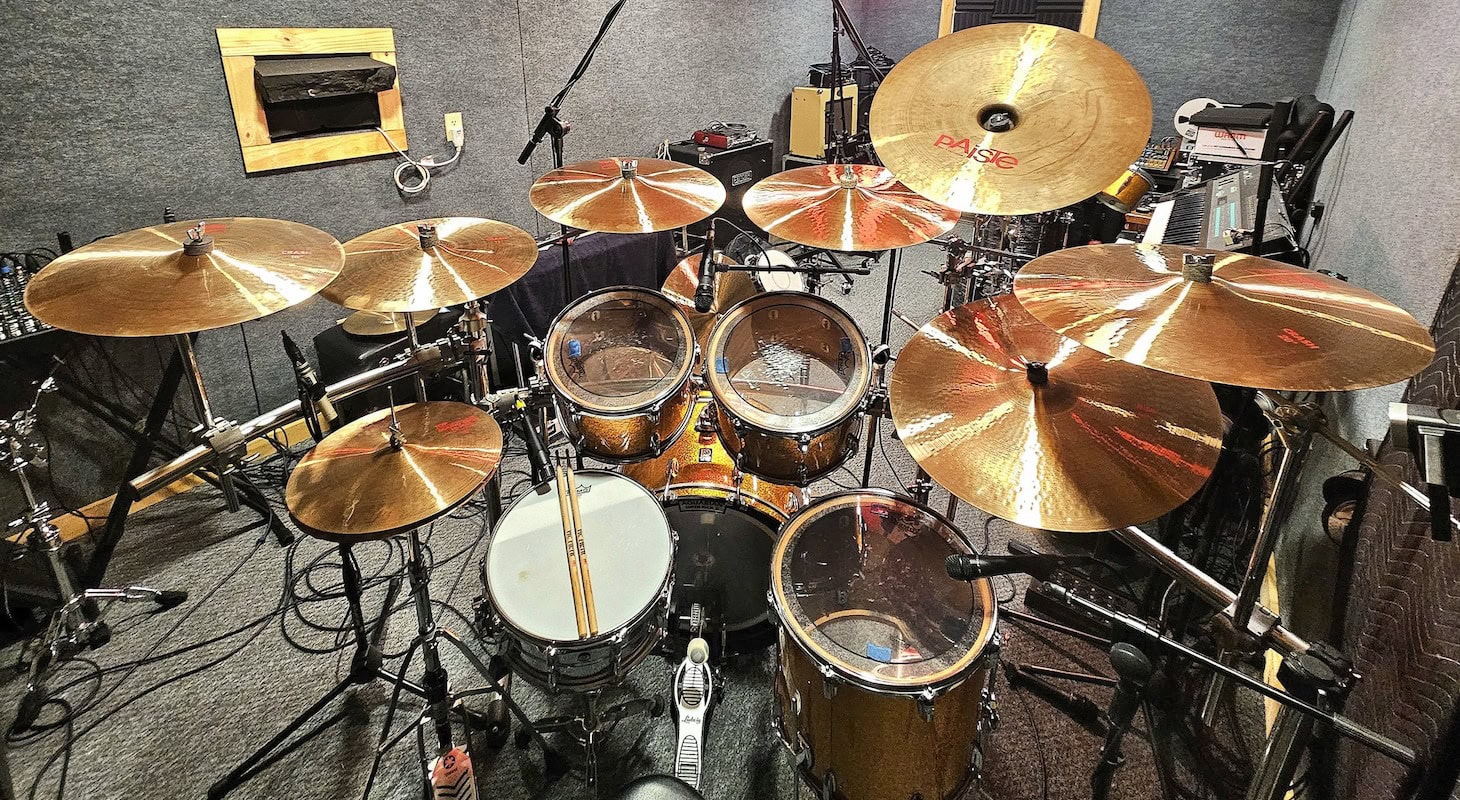
Tom mics have the potential to add a serious amount of beef to your drum sound. Whether you’re playing live gigs or recording in the studio, using a decent set of tom mics will bring out clarity of tone and reflect as much of your drum sound in the mix as possible.
Finding good tom mics isn’t always the easiest thing. Most microphones aren’t advertised as tom mics, so it can be daunting to choose ones that you think will work well.
I’ve put together a list of five of the best tom mics that cover different budgets to help you make an informed decision. Let’s check them out.
5 Highest-Quality Tom Mics for the Money
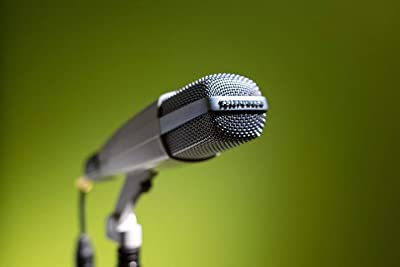
We’ll start the list off with an incredibly strong tom mic option. The Senheiser MD 421-II is designed to be used with a multitude of instruments. However, it feels like it was made just for your toms.
I’ve been a longtime fan of Sennheiser’s gear. I’m particularly fond of their e385 vocal mic, which has replaced the SM58 in my estimation as my go-to live vocal microphone.
I found the MD 421-II reassuringly weighty in my hand, so I wouldn’t feel scared about bringing it to a gig.
The best way to describe it is that it makes your toms sound how toms should be. Many other mics need a bit of tweaking to the sound whereas this mic will produce a warm and large tom sound as soon as you plug it in.
It has a serious snap to it with a hefty thump on the larger toms. It’s no surprise that this is one of the go-to mics for toms. You’ll find several of them in the mic lockers of studio producers all around the world.
I’d liken this to a classic hard rock tom sound: plenty of weight and authority.
If you want some of the highest-quality mics that are still within reach for the general buyer, getting a few of these will enhance your drum sound dramatically.
As good as this mic is, there are a few things to mention that I don’t like. Firstly, it’s fairly expensive. You probably won’t be buying just one of them, so getting a few will cost a scary amount, especially if you have a large drum set.
However, at this price point, it feels aimed either at working pros, either in studio sound or live sound engineering. It’s a worthy tax-time purchase for sure!
The biggest problem is the mic clip. It’s not designed well, and it buzzes when you clip the mic onto the toms. It feels flimsier than the mic itself. I had more joy when I made the choice to attach them to boom stands instead of clipping them to the toms.
For studio use, where I like to leave mics set up, using boom stands for tom mics won’t be a problem. It’s a different story if you’re limited for space. Trying to set up cymbal stands as well as multiple boom stands all around the kit can get frustrating at the best of times. I wouldn’t try this solution on a small stage at a bar.
The boom stands will also make your shot look cluttered if you plan on making drum videos with these mics.
However, the sheer quality of the mics more than makes up for the bad clip design. If you can make a plan to get around that, I’d highly suggest getting these mics for your toms.
PROS
CONS
2. Shure PGA56
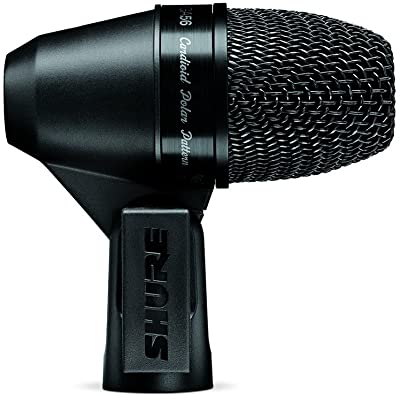
Shure has long been the biggest name in the mic game, and for good reason. Its SM58 and SM57 are industry standard mics for recording and live use. Does the PGA56 live up to the name?
The Shure PGA56 wildly contrasts the previous mic as it’s the most affordable mic on this list. Getting a budget mic is always something to consider, especially when you can get one as good as this. Let me tell you why.
The PGA56 has been specifically optimized for percussion instruments, meaning it works best when picking up sounds from snare drums, toms, or any other aggressive sound source.
I found that the mic fits very nicely onto the toms and doesn’t get in the way of the sticks. Some larger mics are difficult to position, but these are a breeze.
The mic has a surprisingly solid build and will be able to tank many stick hits over time. That’s always something you need to worry about, especially on toms where your strokes may not be as accurate as you’d like them to be.
I know plenty of drummers who enjoy using the SM57, across the board. The SM57 does a great job on the snare drum, but the PGA56 has a rounder tone which is why it works best on the toms. It’s not the highest-quality mic around, so I found that I had to fiddle a bit with the EQ to get the best sound possible.
However, I feel that getting a few of these at a cheap price and then splurging a bit more on high-quality overheads and a bass drum mic is a fantastic idea.
I feel like the clip is designed quite well, and I had no trouble attaching it to my toms without worrying about it moving around or getting in the way. Harder, more aggressive hits yielded a little bit of unwanted buzz, which I found relatively easy to mix out.
Avoiding this completely required the use of a separate mic stand, which I’d prefer not to do, if at all possible. Another option, for live use, is aftermarket mic clips, or using blu tack to “deaden” the clip!
PROS
CONS
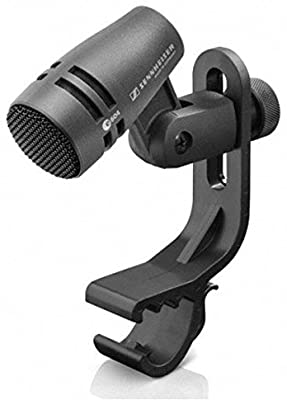
I’d consider the Sennheiser e604 the leaner, lighter younger brother to the MD 421. I’m particularly fond of this mic as it borrows many of the high-tech designs of the MD 421.
The first thing I noticed about the e604 is its diminutive size compared to other tom mics. It’s a lot smaller and less bulky. I was pleasantly surprised to find out that, because of its size, it clips comfortably onto any drum rim. No boom stand necessary!
To my ear, it captures the attack and sustain of toms very well. This means you get a strong initial impact followed by a booming and resonating tone.
The sound is fairly deep, yet extremely clean. I’m highly impressed at how Sennheiser has managed to include so much depth in such a small microphone.
I’ve also found that this mics isolates sound better than the Shure PGA56. When you place it on one tom, I very rarely get sounds from the toms around it. This makes mixing the drums much easier, especially in the studio.
My one gripe with the mic is that it’s made of plastic. It’s not as weighty as I’d like: it feels more frail than a standard drum mic. It doesn’t feel as secure and solid as many of the other microphones on this list. While it may survive a few stick shots over time, it definitely won’t last as long as mics with metal cases if you use it heavily.
Like anything, there are microphones meant for the rigors of touring, and microphones meant for studio use, or infrequent live use.
However, the silver lining is that the plastic casing makes the e 604 a cheaper option to get than a similar mic that has a metal casing.
Overall, it’s a wonderful alternative to the famous MD 421 that comes at a cheaper price and with a less bulky design. I’d suggest getting this if you want something similar to the MD 421.
It’s a great lower-price alternative for those on a smaller budget or just dipping their toes in the waters of drum amplification or recording.
PROS
CONS
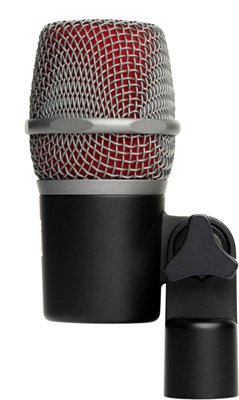
The sE Electronics V Beat mic isn’t as popular as the ones we’ve gone through so far. However, it’s worth mentioning as it offers some unique qualities that the others don’t. sE Electronics is doing some cool things in the microphone world and this mic offers a small taste of that.
I’ll be the first to admit that this isn’t a brand I’m overly familiar with, but there’s plenty to admire about this dark horse.
Firstly, it’s a dedicated drum microphone, so it’s optimized for loud drumming. The sound it produces is clear with a tight bottom end. The mic does well to eliminate any low-end muddiness that many other dynamic mics tend to bring out from toms.
Even the hardest-hitting drummers I know couldn’t turn this microphone into a muddy mess.
The best way to describe this mic is to compare it to a Shure SM57 as it is similarly priced. To my ear, it sounds a tad bit darker than the SM57, giving you deeper tones to work with. My favorite part about this mic is the way the sound comes through for you to EQ.
It’s pretty much a plug-and-play kind of microphone since nothing needs to be taken away in the EQ. It sounds really good as soon as you play through it. I appreciate the option of adding things to the EQ to tailor the sound, but you don’t need to eliminate any frequencies as you do with other mics.
When the need arises, EQing the mic is relatively easy and intuitive, which is a blessing for on-the-fly live adjustments.
The sound isolation is also excellent. When I positioned the cymbals lower, there was minimal bleed from the cymbals in the tom mic. Since the sound isolation is good, the cymbals don’t get picked up even if they’re very close to the toms.
Since every drummer likes their setup slightly different, this makes the V Beat a very versatile mic for a range of setups: ideal for sound engineers working with a range of bands, such as those who do sound for a venue, rather than touring with one band.
I do, however, have one gripe with the V Beat. While all the mics I’ve gone through could pass by when placed on a snare drum. Unfortunately, the V Beat doesn’t cut it. However, that’s only a small gripe as the goal is to find a good tom mic. It just means the mic isn’t very versatile.
It’s a good tom mic, but it won’t do much else: in a way, it’s the Marshall amp of drum mic!
PROS
CONS
5. Audix D4
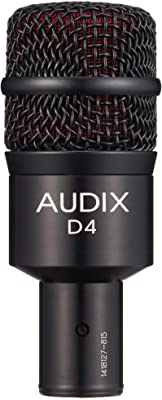
The final mic on this list is the Audix D4. The difference between this mic and the others is that it caters more to lower-frequency sound sources. This means that it’s meant to be used on floor toms. To be clear, it excels on floor toms!
It works fairly well on kick drums as well but for the sake of this list, we’ll stick to floor toms.
I first saw this mic being used by a drummer on YouTube called Austin Burcham. He has one of the nicest sounding drum mixes I’ve ever heard, so I had to find out what mics he was using.
The Audix D4 was sitting snugly on his floor tom and producing a beautiful, deep and clean sound.
If you want to get a bit more low-end out of your floor tom, this is a great mic to get. It’s going to make your rack toms sound boomy which you may not like. Audix offers the D2 mics which are intended for that instead.
I’ll point out that plenty of drummers want that booming, reverberating tom sound. I’m a big fan of John Bonham’s “When The Levee Breaks” sound, or Eric Carr’s recorded tone on Creatures of the Night. Deep, authoritative, and powerful: that’s what I hear in this tom mic.
I love how all Audix mics have a great built-in EQ, meaning this mic sounds great before you need to do any tweaking. If you’re not confident in your mixing abilities, the D4 is a good mic to get. It doesn’t demand much extra attention.
It also has a great clip-on design that doesn’t produce any unwanted buzzing, especially if you clip it on as tightly as possible. The design of the mic itself is also very high-quality. The clip and the mic both feel very sturdy.
I feel that Shure and Audix are two popular companies to look for drum mics. If you’re not a fan of the Shure mics, you should check out mics from Audix.
This D4 may just be what you need to get a powerfully deep floor tom sound.
PROS
CONS
Are Tom Mics Essential?
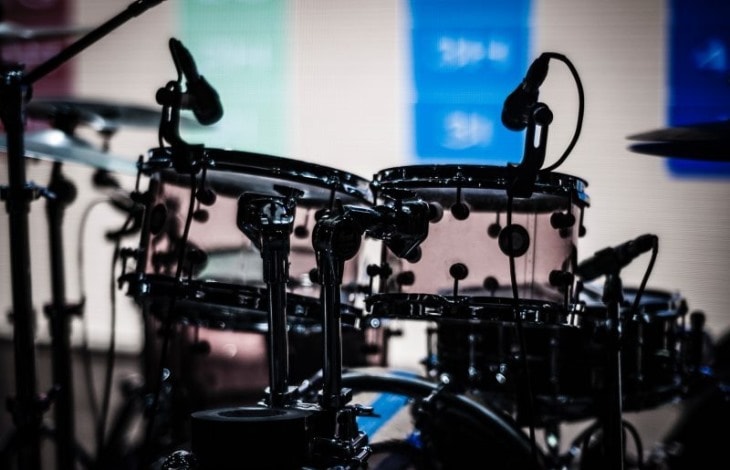
You may be wondering whether tom mics are essential to getting a good sound in the mix. There are a few layers to this question. Firstly, you should know that tom mics are the last thing to think about when selecting mics for your drum set.
The most important mics will always be the overheads and the bass drum mic. The overheads will give you a clear overall sound of your kit while the bass drum mic will enhance the beefiness of the bass drum.
If you have a good set of overheads and a kick mic, then you can think about the snare drum and toms afterward.
Putting mics on your toms will enrich and add depth to your tom sound in the mix. If you don’t have them, they may sound distant. Putting mics on them will bring them closer and it will allow more control when you’re EQing.
So, they definitely do make a valuable difference, but make sure your overheads and kick drum are covered first.
Wrap Up
Choosing tom mics is often easy as you can get the same mic for each one of your toms. You could also go the route of getting a different mic for your floor tom like with the Audix D4.
Whichever way you choose, just make sure that the mics fit what you’re looking for and are in your budget.
You get some really good mics that are affordable. However, they’ll never give you as much depth as the more expensive mics.
Like I said earlier on, you should consider getting cheaper tom mics and then using the saved money on higher-quality overheads or a kick drum mic.
