
As a drummer, I’ve been playing all kinds of cymbals from every brand for over two decades. I cut my teeth on cheap, tin-like metal dishes until I could get to hand-hammered glory. Yes, just like every other fellow skin-hitter in the world, I had to work my way to the perfect combo through a swamp of brittle, harsh, and dead-sounding cymbals.
Even now I can’t make up my mind; all big cymbal brands claim to be the best, so we end up being as lost as we can be, every time we want to get new cymbals for our kits.
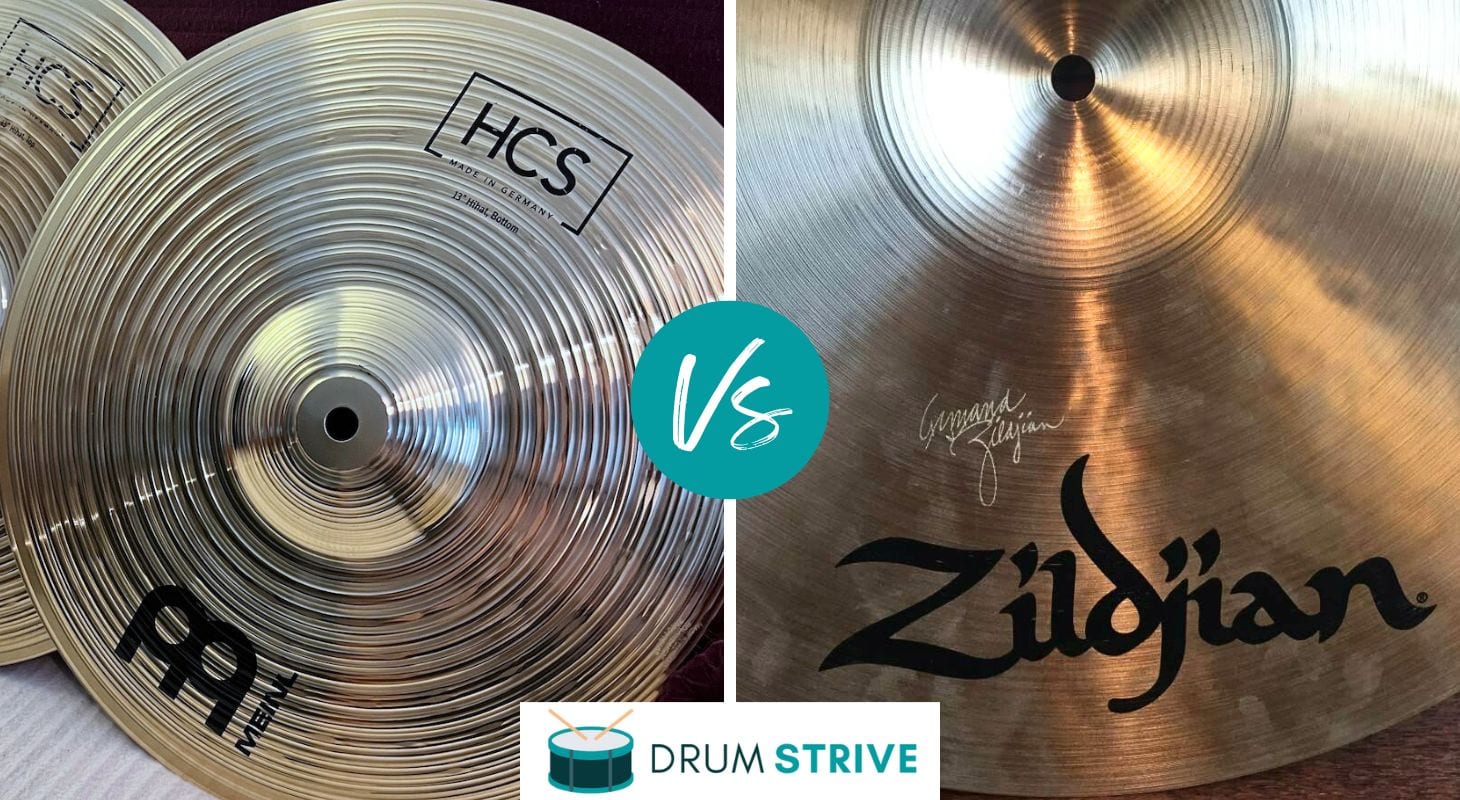
Meinl and Zildjian are two of the leading cymbal brands in the world. Although Zildjian has been the biggest cymbal brand for decades, Meinl has very steadily crept up the ladder of popularity in modern drumming.
They have so many great products to offer that directly compete with the best cymbals from Zildjian. I’ve chosen between these two for decades and have had my hits and my misses over the years.
Yet, this is not about me; what we’re about to work together is which cymbal brand makes more sense for you.
Let’s just navigate what the strong points of each of these brands are so you can make an informed decision about where to spend your hard-earned money.
Let’s do it!
Meinl Cymbals - Overview

The Meinl company was founded in 1951 in Germany. Originally a wind instrument company, Meinl started manufacturing cymbals in 1952. It’s fairly young compared to Zildjian and its more well known competitor Sabian. However, Meinl's innovations over that time paved the way for the wide range of cymbal types they have available today.
One of the things that made Meinl such a huge player in the market is that they were the first cymbal company to sell cymbal packs.
No other cymbal company had been selling pre-packed cymbals before that. It’s something that is now very commonly seen in the cymbal market, and Meinl still has some of the highest-value cymbal packs on offer.
Top 3 - Meinl Cymbals
Preview | Product | Price |
|---|---|---|
 | ||
 | ||
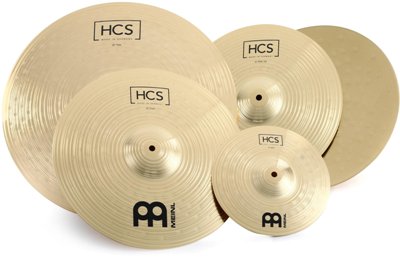 |
I mean, you can buy a beginner-oriented, super affordable HCS Basic pack or go all-in and spend 4 digits on a Byzance Artist's Choice pack.
The catch here is that both sound great. Believe me, I surfed the cymbal pack waves for years.
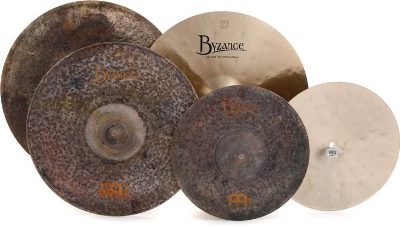
Now, I remember the first time I took a 5A stick and hit a dark crash and had an instant crush. It was from Meinl’s main line of cymbals, the Byzance Series. They’re all hand-hammered and made of a B20 alloy. There are several lines in the Byzance Series such as the Traditional, Dark, Brilliant, Extra Dry, Vintage, and Foundry Reserve.
The thing with them is the complexity in the sound. I’m serious about this, they ooze different layers of vibrations; it’s like entering 3-D tones. I know, that’s not everyone’s cup of tea, but for big crashes (17” or 18”), it becomes haunting. Also, rides (22” and bigger) have a different texture that will change the way you play.
One thing you can rest assured is that every cymbal in this series is top-quality and can be used in professional situations. Some of Meinl’s more affordable products are the Classics Custom Series and the HCS Series.
Another thing that hits you right away about Meinl’s cymbals (and I wish more brands would imitate) is that most of the cymbals have stunning visual aesthetics.
Perhaps, the most extreme are the Classics Custom Dark, the Pure Alloy series, and the Artist series, with the Aric Improta 22” ride taking the weird-but-classy award home with a standing ovation.
Also, their most famous, the Byzance Extra Dry and Vintage lines have earthy appearances that will turn heads at every show you play. Many drummers have seen these beautiful cymbals on social media and decided to give Meinl a go.
I don’t know if you care a lot about what your drum looks like when playing live or not, but I’ve been playing in tribute bands for a while now (an artist making ends meet) and whenever we go heavy, I’ll bring my Meinl Classic Custom Dark set and shock the audience with it.
Some famous drummers that endorse Meinl are Benny Greb, Anika Nilles, Matt Garstka, Chris Coleman, Chris Adler, and Adam Tuminaro.
Zildjian Cymbals - Overview
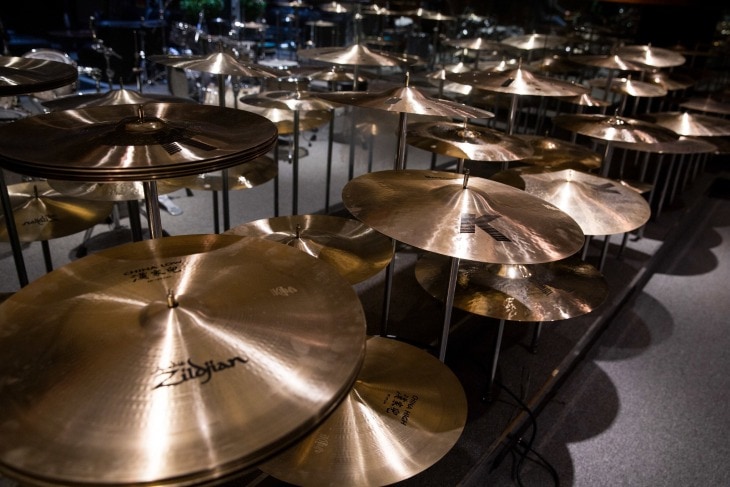
The Zildjian company was started in 1623 in the Ottoman Empire, making it one of the oldest musical instrument manufacturers in the world. Although Zildjian also makes percussion and sticks, they’re most widely known for making cymbals.
The company is so well known that the first time I walked into the music store with my dad for my first cymbal set, I thought Zildjian was the only cymbals brand in the world. It’s not just me, most people associate cymbals with Zildjian, even if they aren’t musicians.
This is no surprise given they’ve been redefining the cymbal standard for over 400 years, right? Yes, Zildjian has taken centuries of experience and poured it into some of the highest-quality products in the world still in business.
Top 3 - Zildjian Cymbals
Preview | Product | Price |
|---|---|---|
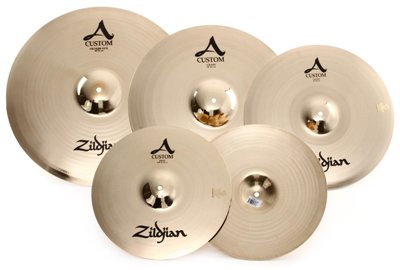 | ||
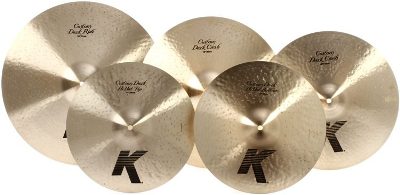 | ||
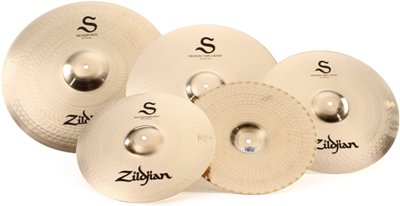 |
My first cymbal set was a modest ZBT made of a 14” hi-hat pair, a 22” ride, and a 14” crash. To be completely honest with you, I still have that ride and use it whenever I need something that can blend better with the drums instead of shining so much through the mix.
Zildjian's top line of cymbals are the K and K Custom. I’m sure you’re familiar with them since they have been used on popular recordings and at gigs by pro musicians in front of thousands.
The K cymbals have a dark, rich and warm tone that makes them sound really good. There are some unique lines within the K family such as the Special Dry and the Constantinople that have unique qualities to add.
One drawback of the K family is that they were designed with jazz musicians in mind. Therefore, they’re thin and not as durable if you have a heavy hand. They sound totally amazing but are too costly to receive your punishment for long periods if you play a heavy musical style.
The second most popular lines from Zildjian: the A and A Custom. These have a brighter and louder sound. They’re typically used for heavier music.
These are also my favorite Zildjian lines. They might not be the ones everyone gravitates toward, but I just love the A, A Custom and the Z and Z Custom lines. For example, the moment I bought my first KZ hi-hat pair (K on top, Z on the bottom), I knew there was no turning back. It’s just too perfect to be true.
The same goes for A Custom in small crashes (14” or 15”). They’re bright, fast, and can cut through like a knife. These cymbals have the perfect balance between brilliance and weight.
As for big, heavy sounds that sound classic instead of complex, nothing beats the Z and Z Custom lines.
You’ll often find drummers mixing A Customs and K Customs to get a variety of cymbal tones across their drum kits.
For example, a great combination is a big 22” or 23” dark K ride with bright small A or A Custom crashes and splashes. Likewise, dark crashes with a bright ride can help you move the entire band from verse to chorus and vice versa.
Some of Zildjian’s more affordable cymbals are the S Series and the ZBT Series.
Yours truly here used the ZBT for a long time, so they’re road-tested. Believe me, they sure did take their share of punishment in long rehearsal sessions in my young years and still hold it together.
Since Zildjian cymbals are so popular, there have been many drum legends that have endorsed their products over the years.
Some names that come up are Buddy Rich, Gene Krupa, and Ringo Starr. Some modern drummers who endorse Zildjian are Larnell Lewis, Nate Smith, Aaron Spears, and JD Beck.
Musical Styles
One thing I learned in the past two decades playing the drums is that when it comes to choosing your cymbals, it should heavily depend on what type of music you’re playing.
If we could divide it in two, I guess the two biggest musical styles would be rock and jazz. Both styles require very different drum sounds, meaning you wouldn’t quite fit in if you don’t have the right sound.
Rock music requires a heavy and bright sound, piercing cymbals with long sustains would work best. Zildjian A Customs or Meinl Byzance Traditionals would be good choices.
The cymbal sound in jazz needs to be darker and mellower. The cymbals with a short sustain tend to work better and serve the sound instead of cut through it.
So, Zildjian K Customs or K Constantinoples would work wonderfully. When looking at Meinl cymbals, the Byzance Extra Dry or the Byzance Jazz Series would be the cymbals to get.
All other styles of music fall somewhere between these two extremes. Metal music requires bright and piercing cymbals. However, they need shorter sustain as drum parts can get very quick.
So, a good balance of dryness and brightness would work well. Both Meinl and Zildjian offer a good mixture of these qualities in their cymbals.
Price
When it comes to price, both companies are on an even playing field. The general price for the top-of-the-range cymbals tends to be similar across all cymbal brands. This doesn’t include the special cymbals that haven’t been massed produced.
However, there is a big difference when it comes to budget cymbals. Meinl’s HCS cymbals pack the most value for money compared to other budget cymbals on the market.
Meinl also sells the Classic Custom cymbals that work wonderfully for rock and metal and are more affordable compared to Zildjian’s A cymbals.
What you might not know is that Meinl was originally a budget cymbal company. So, that side of them has continued to grow and created a new benchmark all other companies need to abide by.
I guess Zildjian might have started as a budget brand too, but it might be hard to find a brochure or an ad from the Ottoman Empire, right? (lol)
Final Word
I’ve been playing drums in many different scenarios for the past two and a half decades. What I learned during that time was that it’s not necessary to choose between one cymbal brand and the other. On the contrary, you should find the sounds you need for the position you need and go with it regardless of the brand.
In my case, I have a 19” Zildjian A Custom crash that propels my band forward like a rocket out of Cape Cannaveral but my Meinl 24” Byzance Dark Big Apple ride can bring enough complexity to sound like Pink Floyd creating ambience and space.
So, in my opinion, both brands have a sound of their own and can bring something special to your playing.
If you’re an intermediate or pro drummer who is looking for top-of-the-range cymbals, you’re going to find great products from both Meinl and Zildjian.
Meinl offers a wide range of dry and musically complex cymbals whereas Zildjian offers cymbals with that classic sound that most drummers are looking for. You heard them in so many records throughout your life they feel like home.
Finally, I would say that if you’re a beginner drummer, Meinl’s budget cymbals will be a better option to get as they sound better and cost less.
Overall, both companies have huge catalogs of cymbals to choose from and every cymbal is catered for individual needs. Decide what you need and then choose which model of each brand goes better with your playing style.
Once you put that dream combo together, you won’t regret going with either.
Happy (complex and classic) drumming!

I used Zildjian vintage cymbals (1967 – 1972) since the mid-70s. Recently purchased a new Pearl 10-piece set with Meinl Classics Custom Dark Cymbals (7 cymbals + 15″ Hi-Hats) and I will not go back to Zildjian.
Have always played Zildjian, sat in recently played mid grade meinl. I would say better sound than the zildjian zbt . Very impressed.
Beautifully written! Short, sweet, and very informative.