
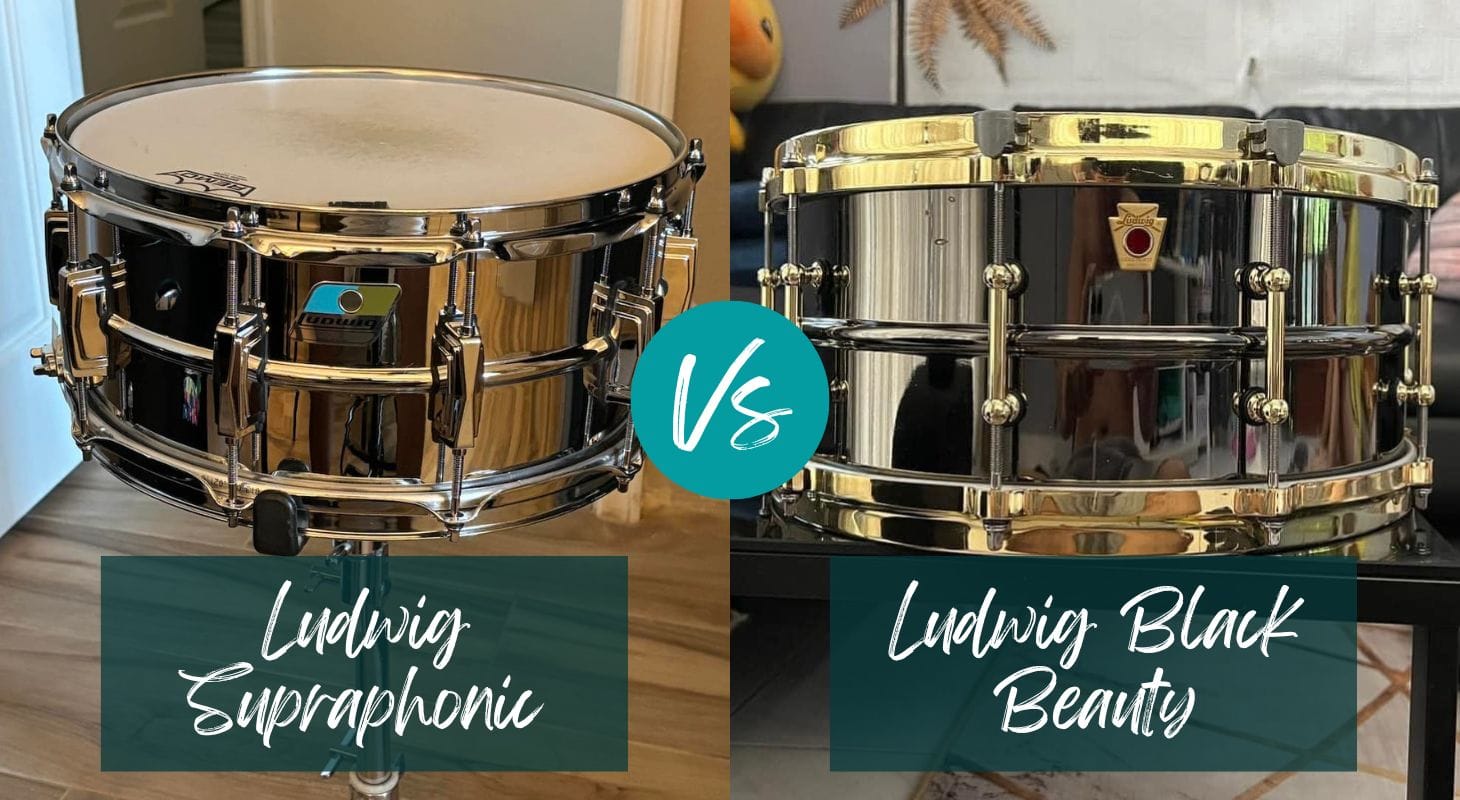
Some musical equipment just sounds like home. You’ve heard it so many times it sounds natural, as if it had always been there.
When it comes to iconic snare drums, Ludwig is the brand that immediately comes to mind. Snares like the Supraphonic, introduced in 1958, and Black Beauty, introduced in 1920, are still among the most legendary snares to play or record in the studio.
While both snare drums are held high in the Mount Olympus of snares by drummers, they possess distinct sonic qualities that make each unique in its own way.
In this article, I'll share my personal experience using both snares on different occasions. I'd bought the former myself and was gifted the latter by an elder brother quite a while ago.
I've used both for both live sets with my band and our studio sessions. So you can say that I have plenty of experience with both the Supraphonic and the Black Beauty, let me share it with you.
Supraphonic
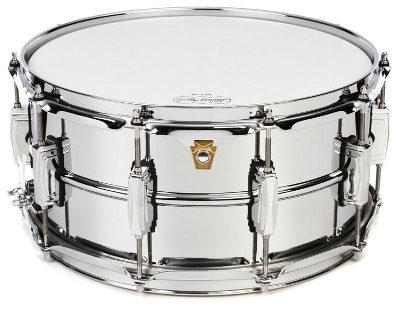
Black Beauty
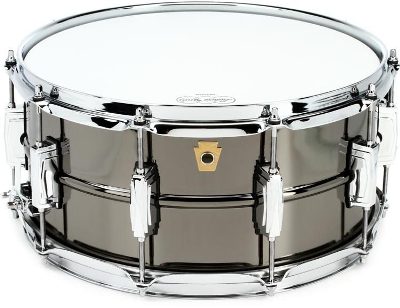
Supraphonic
Shell
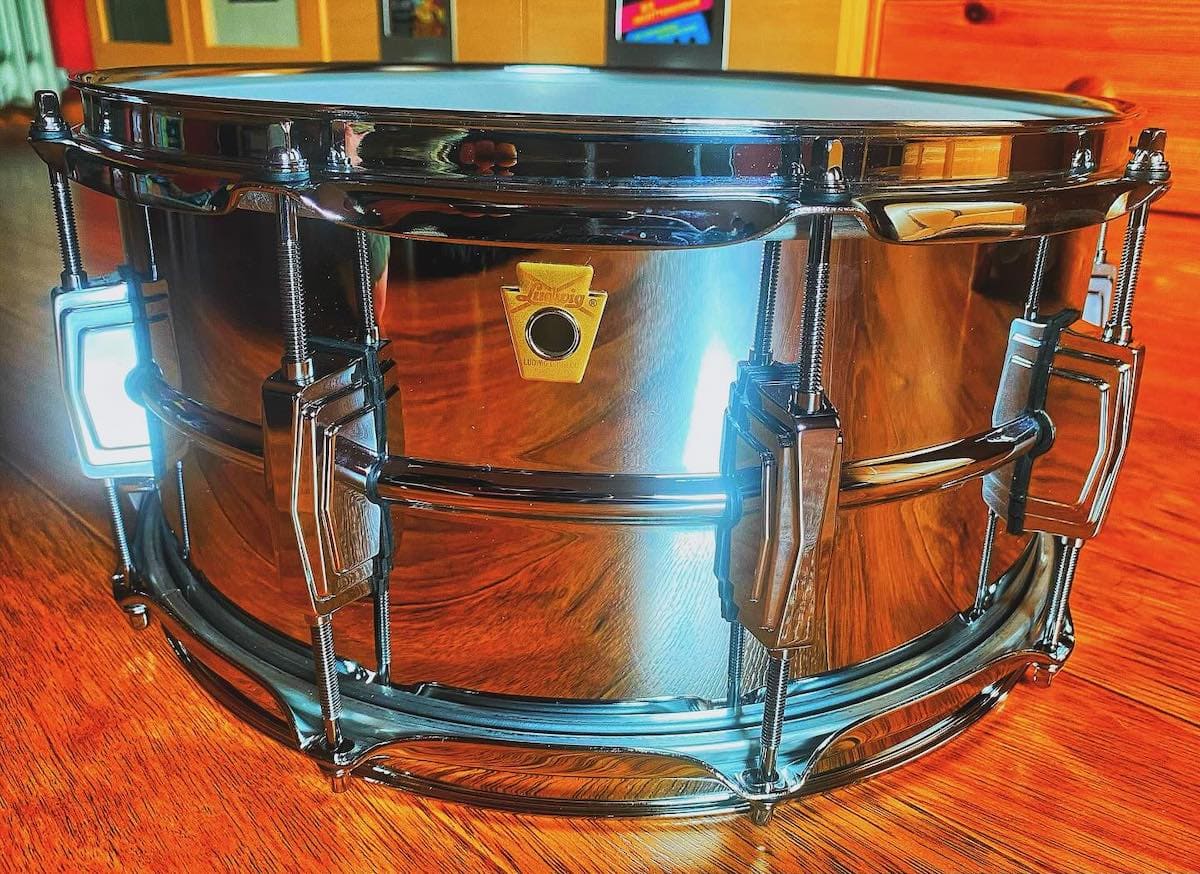
Ludwig Supraphonic LM402 - the aluminum shell looks and feels absolutely spot on!
To begin, let me just say that Supraphonics look great. Ludwig’s idea to give the Supraphonic snare a seamless, beaded aluminum shell makes it look like the timeless classic it is. Plus, it delivers a bright, crisp note, with a quick decay. You get the perfect mix of snare crack and a full, resonant, bold tone.
The 1.7mm aluminum shell makes the snare highly responsive to input, allowing for a wide range of dynamic expressions. Many have said the Supraphonic was their “desert island snare” because of how much sonic territory you can cover with it.
The snare has a classic look, with a chrome-plated shell and tube lugs that give it a timeless appeal. It’s exactly the image most people think of when they think of a snare drum. And it's also the image that I used to dream of, prompting me to eventually get it.
Hey, being a huge Bonham fan also helped push me in the Supraphonic's direction! Who can forget that almighty snare sound in “The Rover” making way for the whole band? It was love at first listen!
Sound
The Supraphonic's legendary sound has made it a mainstay of the Ludwig snare catalog for well over 50 years, and for good reason. What drummers (including me) absolutely love about the Supraphonic is its lightning-fast response and hypersensitivity. It fit right in the sound of my Ludwig Classic Maple kit.
If you’re a rock player and you have a heavy hand, you’ll notice the snare sound jumps back at you very fast. Every transition and fill becomes a different experience because you have the weight and the snap of a snare this big but also a sound that’s fast and that will cut through.
To be honest, the first few weeks of playing with it became a steady stream of snare-centered fills. It’s addictive.
Its wide tuning range is another praiseworthy feature. If you experiment with muting enough, this snare can fit in almost any genre of music.
I used it to play some mellow jazzy feels and then went on to full-flare rock banging and results were great on both scenarios.
On one hand, even after muting it, much of the snap is still there and allows quieter jazz feels to shine through the performance. We rehearsed in a living room and nobody called the cops.
On the other hand, when you move your internal switch to rock god, things can get very loud, very quick.
Ludwig’s Supraphonic carries with it quite the accolade. The Supraphonic is in fact the most recorded snare drum in the history of music! Specifically speaking, that would be the Supraphonic LM400 model.
The LM400 is widely considered to be the “gold standard” of snare drums. It is in fact the snare drum that all other manufacturers try to replicate at some point but, with little success honestly.
Strainer
Ludwig's Supraphonic snare features their legendary P85 strainer which is known for its smooth operation and reliable performance.
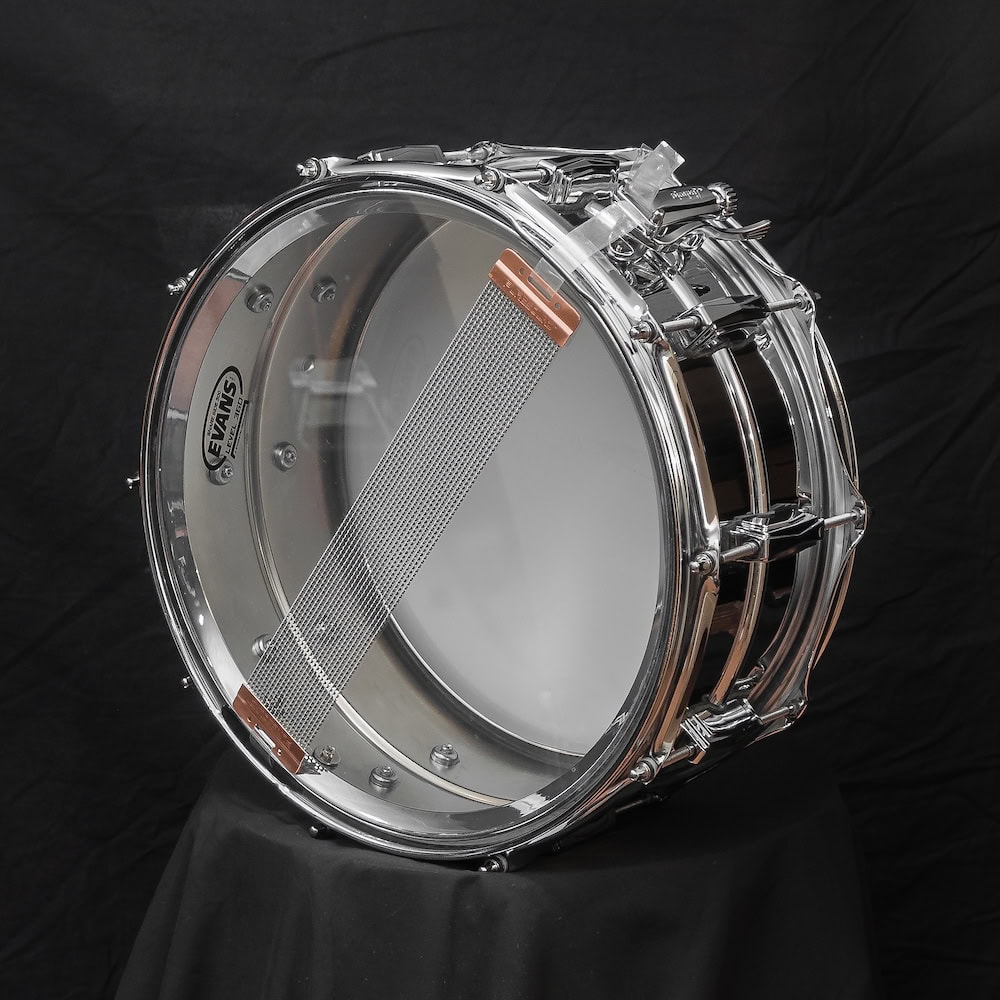
Ludwig Supraphonic LM402 comes with Ludwig's legendary P85 strainer.
Playability
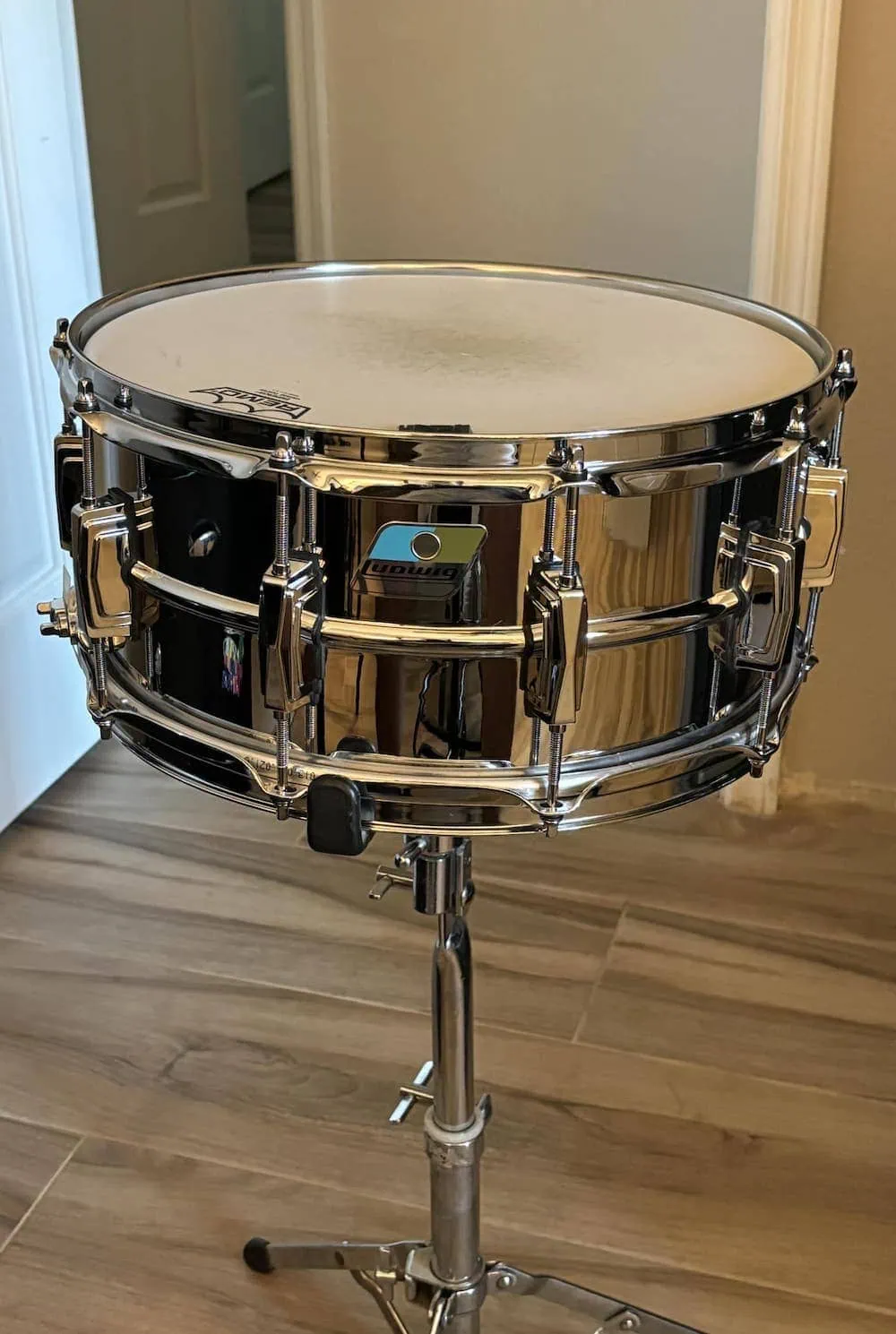
My old Supraphonic (LM402)
After first getting my Supraphonic, I continued using the stock head for quite a long time. It's not unexpected from a snare costing this much, but it was indeed a breath of fresh air coming from cheaper snares that all pretty much come with sub-par stock heads.
The Supraphonic offers an unmatched rebound. The kind of bounce on offer definitely puts a smile on my face every time I start playing it.
The Supraphonic is an ideal tool for those who play fast-paced music styles like jazz and funk, and its bright tone and sensitivity have made it a favorite of drummers like Steve Gadd and Chad Smith of the Red Hot Chilli Peppers.
Famously John Bonham would use the Supraphonic LM402 on most if not all of Led Zeppelin’s recordings and live performances. The LM402 has a distinct crack sound that can be recognized by listeners everywhere.
Black Beauty
Shell
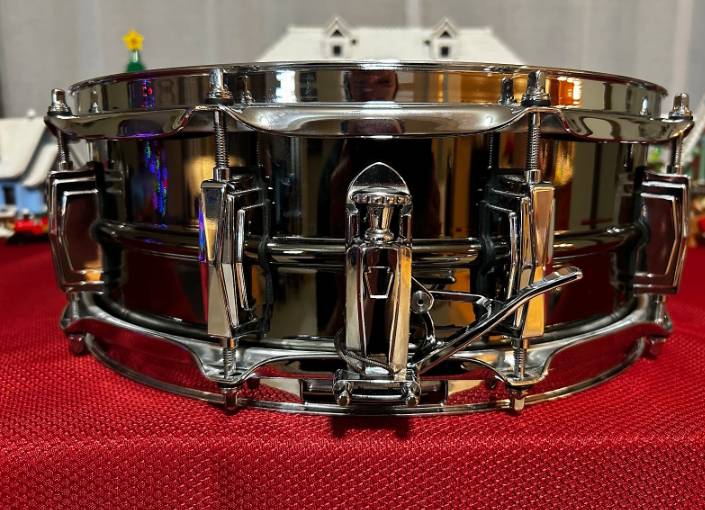
Brass shell of the Black Beauty.
The appropriately named Ludwig Black Beauty used to feature a rather ornate brass shell in the early days of its production. It’s since been simplified but maintains an elegant appearance worthy of its name.
Don’t let that statement fool you, though. These snares are constructed from a single sheet of brass. That single piece is hydroformed (shaped with high-pressure water) into the seamless beaded shell that will become the Black Beauty. This complex and costly process makes it difficult to manufacture the Black Beauty, therefore, only a limited number comes out of the Ludwig USA factory every year.
The snare shells are made from 1.2mm brass and then wrapped in dark nickel plating. Hence the name, “Black Beauty”.
You will notice some variety in the finish as some shells have smooth dark nickel plating and others look dimpled. The dimpling is from a hand-hammering process used when finishing the shell.
Sound
Compared to the Supraphonic, the Black Beauty produces a deeper, more resonant sound with a drawn-out sustain that sort of floats in the air, filling empty spaces. Black Beauty’s sonic qualities make it an ideal choice for drummers that play slower music stylings like ballads and power ballads.
I once had a gig as the steady drummer of a Bon Jovi cover band aimed heavily toward power ballads. I have to tell you, those eighties songs played with a snare like this sound bigger than life. Plus, with the right kind of live mix, your drums will fill the room effortlessly.
I’m telling you, just like with the Supraphonic, it’s hard not to gravitate toward snare-centered fills when playing with it. It’s addictive.
For a monster-sized sound and a fat-cutting tone, you cannot go wrong with a Ludwig Black Beauty snare. The difference in shell material (aluminum for the Supraphonic and brass for the Black Beauty) does contribute considerably in their tonal differences, just like what you'd expect.
Strainer
The Black Beauty snare drum also features Ludwig's P85 strainer, which ensures smooth and reliable snare wire engagement.
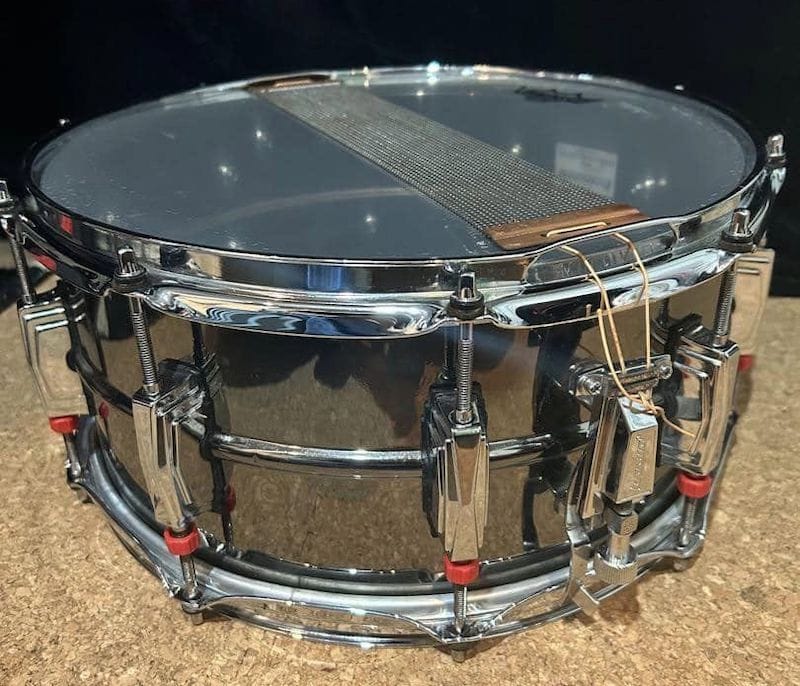
The Black Beauty also comes with Ludwig's P85 strainer.
Playability
The Black Beauty snare drums are responsive and sensitive, with excellent projection and a warm, full-bodied tone that makes it an ideal choice for studio and live performances alike. The response isn't as cut-throat-quick as with the Supraphonic, but I found it's good for other stuff that requires a bigger sound played not so fast.
That said, I actually prefer using this over the Supraphonic in the studio, most of the time. You can call it a personal preference, but its extra warmth and oomph in the lower-mids just feels special, like home. Maybe it comes from hearing so much or because I naturally gravitate toward these mellower sounds, but that natural EQ makes this snare my favorite.
You can enjoy a similarly wide range of tuning with this snare as well, although, again, extremely low tunings would require you to play with dampening.
It is no exaggeration to say that Black Beauty can do it all. From rock, pop, country, funk, metal, whatever you play the Black beauty can be tuned in to fit into any genre.
Which Snare Should You Pick?
When comparing the Supraphonic and Black Beauty, you must keep in mind that both snare drums have advantages and disadvantages, depending on the musical style to which they are applied.
As a rule of thumb, and as someone who plays both often on different projects, I have to say those who gravitate toward mellower, bigger tones would be happy with the Black Beauty and those looking for a more aggressive, faster sound will prefer the Suprafonic.
That said, both can be desert-island snares. They cover so much sonic ground they’ve become legendary snares in every music genre. There’s nothing they can’t do but each shines in its own way.
In my opinion, as a drummer, you should always be considering what you can use in order to make your performance sound the best it can. At the end of the day, the snare is a tool that allows you to get the job done. Choosing the right snare or “tool” can make all the difference in the world.
So, in a nutshell, if you're a drummer who plays in a band that requires a fast and responsive snare drum then the Supraphonic is a great choice for you. If you’re a drummer who plays slower music and needs to fill some of that open air with sweet resonant snare sounds, then the Black Beauty should be the choice for you.

My favorite snare is the “super Ludwig” I picked one up back in 2019 and fell in love with it! So now it’s my go to snare drum.
Not trying to be a smartass here. I’ve always understood that hammered snares are mechanically done during production and not “hand hammered” as some cymbals are. It’d be great to know if that is so or I’m misinformed.
Johnny B