
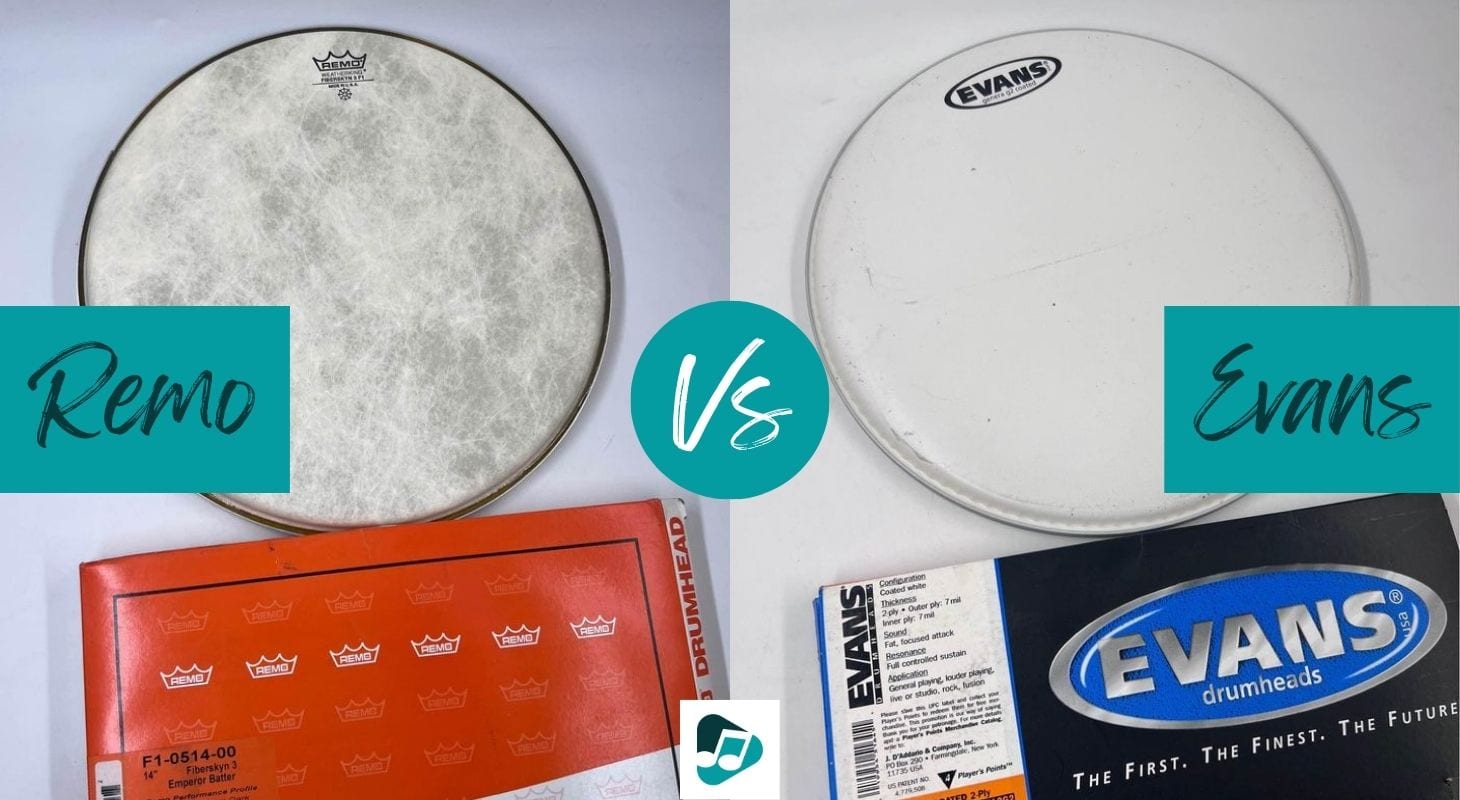
There are a lot of factors that determine how a drum setup sounds. Your choice of drum shells, selection of cymbals, and playing techniques all determine sound quality. However, one of the biggest determining factors for drum sound is your selection of drum heads.
Two of the biggest drum head brands to exist today are Remo and Evans. They have a tight grip at the top of the range, directly competing against each other with all their products.
So, between Remo and Evans, which company's drum heads are better, or more importantly, will suit your needs better?
In a nutshell: Remo drum heads sound warmer, fuller and more 'open', while Evans heads tend to produce a more controlled sound (some people find it 'plasticky'). Although it varies between different models and head types (snare, tom or bass), Evans heads are generally punchier with slightly less sustain compared to Remo.
Just like everything else in the universe of musical instruments, sound quality is highly subjective, and many factors depend on what you're trying to achieve. Drum heads are especially dependent on what genre of music you play.
Quality is quality, though, and these brands have it in spades.
Remo Drum Heads

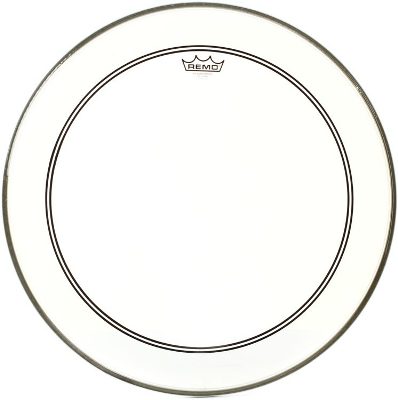
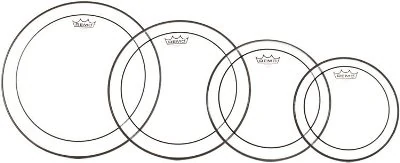
The Remo company is legendary in the drumming world. It was established in 1957 by a man named Remo Belli. The whole idea behind Remo heads is that they were a better alternative to the calfskin heads that were originally on all drums.
Those heads had to be tuned very often due to weather changes. Remo started making heads that didn’t need to be tuned as often. The company changed the game when they pioneered the use of Mylar for drum heads.
The signature crown insignia of Remo is known to most drummers. The most popular drum heads would arguably the Coated Ambassadors. These are used by rock drummers thanks to their open tone and heavy sound.
The reason the Coated Ambassadors are so popular is that they're made from a single 10-inch layer of Mylar that has been specifically designed to have as close to a perfectly warm attack as possible.
What do I mean by a “warm” attack? I mean that the initial transient (hit) is slightly rounded off by the coating. So, it’s less piercing.
In other words, they were designed to be more musical.
Sometimes, even with these great musical heads, I find many snares to be too resonant, so I dampen them with a piece of felt taped on top of the head.
This was an old trick employed during a lot of the Motown recordings and also in the disco era by engineers like Bruce Swedien, who engineered a lot of records, including all the huge Michael Jackson hits.
The idea is to dampen and weigh down the vibrations of the head, thus causing the snare to be deadened. You hear that a lot in the recordings of the 1970s.
On the flipside, drummers who want a more controlled sound will use the Remo Pinstripes. I've always found that it offers just the right amount of sustain. There's also a nice feel, and superb attack on offer. For someone who's fed up of overtones and uncontrolled sustain, these should be a very good option.
This is what a lot of drummers refer to as the modern drum sound. When something is vintage, it sounds warmer. The attack is a little bit subdued, even though it's present.
Once something is described as more modern, it usually means it has more bite and more crispness — in other words, more highs and more attack.
Modern music is also a lot more controlled, especially when recording.
I tend to use noise gates and compression a lot when getting the best drum sounds while I track. Other engineers usually just record direct, unprocessed signals of the drums and treat them in the mix, but I've always found that the recording gear is part of the instrument itself.
For example, when you hear Phil Collins's drum sound for "In the Air Tonight," that's not just a normal drum set — it was processed while he was playing to achieve a certain effect. Choosing the right drum head and tuning it correctly is extremely important to reach this desired effect.
In general, Remo Ambassadors have a vintage sound, while Pinstripes produce a more modern tone.
In terms of snare drums, the Remo Controlled Sound is highly popular. It has just enough crack to go along with the controlled muffling on the snare tones.
Another popular snare head is the Powerstroke P3 which has a bit more ring to it. This one works well for power genres like metal and rock, where it's nice to have a bit of that higher overtone harmonics coming through. It's what we call the top bite of the snare.
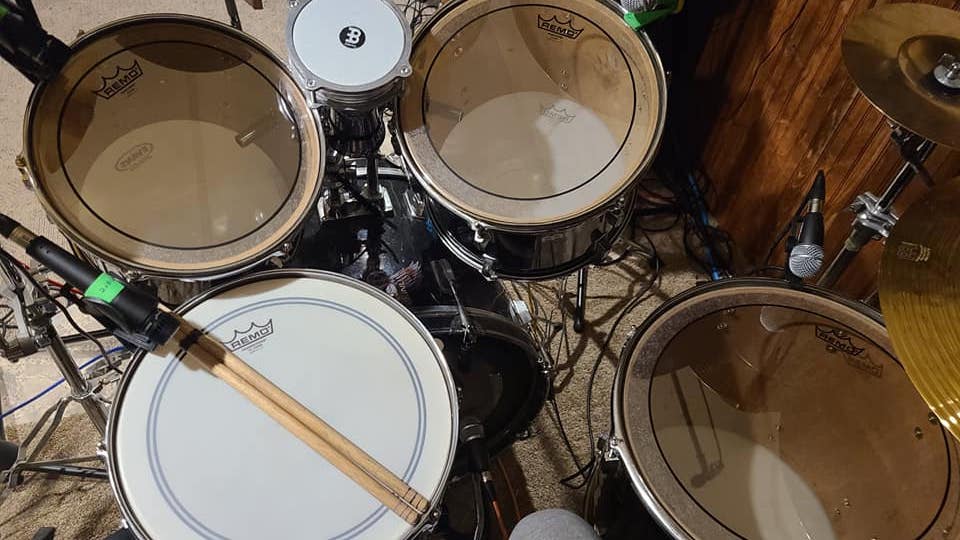
My kit with Remo Powerstroke P3 Coated on the snare and Pinstripe Clears on the toms.
Remo also makes Powerstroke heads for bass drums. They produce a thick tone and beefy presence.
These are particularly great for Vintage and older bass drums like those found on Ludwig and Gretsch kits. Since many of those kicks. Tend to be a little on the boomer side. These heads had a lot of control and clear up a lot of the low overtones.
In other words, they responsible for what you call tight punch being added to the kick or you can still hear the low end and feel it, but it’s not as In other words, they responsible for what you call tight punch being added to the kick or you can still hear the low end and feel it, but it’s not as “woofy”.
The brand also sells one of the best sound solution products on the market with their Silentstroke drum heads. These mesh drum heads attach to your drums like normal heads and lower the volume drastically, allowing you to practice without bothering anyone around you. They also allow you to convert your existing drum kit to a hybrid e-kit by just adding some drum triggers.
I love the Silentstroke drum heads and use them a lot to experiment in the studio. One of the coolest things I've tried is adding triggers so I can use premade samples for Ableton while at the same time miking the exterior of the mesh pad to get the room and organic attack.
Then, when you blend those two together and compress, EQ, and sometimes even add a little harmonic distortion, you get an unbelievable hybrid sound. Bands like Radiohead and Nine Inch Nails use this type of hybrid processing a lot — half electronic, half organic, but all blended in seamlessly.
Although Remo does produce clear drum heads, you’ll mostly see drummers play on coated ones. All of their classic and loved drum heads are coated, leading more drummers to play on them.
My guess is it's because one of the hardest things to tame for most drum sounds is the attack. That's why so many people use recording gear to process drums so much.
While drum heads themselves don't compress, some Remo heads feature an exceptionally smooth coating that creates a natural sound — one that closely mimics the original calfskin drums. This was Remo Bell's initial vision, and he succeeded brilliantly!
Who knows, maybe as humans we are pre-wired to prefer more ethnic-sounding drum characteristics.
Even if you browse online drumming gear sites like Sweetwater, you'll find that their coated heads always get a higher number of reviews as compared to their clear counterparts, indicating that they sell much more.
Some famous drummers who endorse Remo drum heads are Benny Greb, Daru Jones, Taylor Hawkins, Matt Garstka, and Chad Smith.
Overall, Remo is a fantastic company that has products for everyone. If you’re looking for classic drum heads that have been loved and used for over 60 years, look no further than Remo.
Evans Drum Heads

The Evans company has been around for almost as long as Remo has. However, the company was acquired by musical giants, D'Addario, in the '90s and have been making products under the wider name since then.
So, Evans by D'Addario are the direct competitor to Remo heads, having similar models and builds.
However, at least according to their own claims, Evans drum heads are driven by technological innovation. It’s a goal of the company to use technology to create the best possible drum heads they can create.
Their most recent push with this is the Level 360 drum heads. The catchphrase is “Technically a Drum Head, Technologically a Revolution”.
I'm usually a bit suspicious of companies that advertise themselves with such hype, especially after being taken over by a large corporation — in this case, D'Addario.
You see this a lot with companies that claim to make huge leaps in finding ways to bring you the most incredible quality at a fairly affordable price. Usually, this means they're cutting corners a bit or outsourcing manufacturing.
This pattern is common among boutique and formerly independent companies like Waldorf, Akai, Solid State Logic, and most recently Sequential. After corporate acquisition, there's typically a surge in aggressive marketing.
For now, it seems Evans is still legit and made in their dedicated New York factory. I hope it stays that way.
These drum heads are balanced all around, making them a lot easier to tune than most other drum heads. They also have a steeper collar that allows them to grip the drums better.
One of the best lines of heads from Evans is the UV drum head selection. These are coated heads that don’t wear out and go out of tune. Evans set out to create a coated head that doesn’t start to look ugly after months of playing and the UV drum heads do the job exceptionally.
The UV is ideal for touring drummers. While I haven't played huge stadium tours with big acts, I've done 20–30 city runs with smaller indie bands, and let me tell you — things can go wrong so often that you might only get 15 to 20 minutes for sound check.
A drummer's worst nightmare is having a drum head break before or during a show. Sure, I carry backup snares and heads, but swapping them out is tricky since mounting and unmounting takes precious time, even if you're just changing the top head.
So, you can see why having a more synthetic technologically advanced head that is pretty much resistant to anything you throw out can be quite seductive.
That is, of course, as long as the result is still musical and inspiring. As I said earlier, Evans has often been reviewed by some of my peers as sounding a little bit too synthetic.
I don't hear that plasticity, especially when I'm playing with an Evans drum head. The difference becomes more noticeable only when doing quick A/B comparisons between different drums with different head brands.
When switching from a resonant vintage snare with a Remo head to a shallower modern snare with an Evans head, you'll notice the Evans head sounds less lively.
The problem with that is that unless you're switching out the heads in real time as in a trial-and-error experiment, you can't really tell if it was mostly the snare that changed the sound or if it was that head on that snare — there are just too many variables.
That's why what I like to do in the studio is have multiple parts of kits with different heads from different manufacturers already installed and pre-tuned so that when I'm testing out a kit for a certain song, I can swap out things in real time within seconds and see what the real difference is.
It's kind of like trying out different loops or patches on a VST when you're producing a track. It's easy to compare things when you can switch easily and quickly; your ear can then grasp the differences in detail.
Though Evans seems to be a bit more about precision, reliability, and endurance than vibe, I will say there are a few products they make that are quite unique and unmatched by other brands.
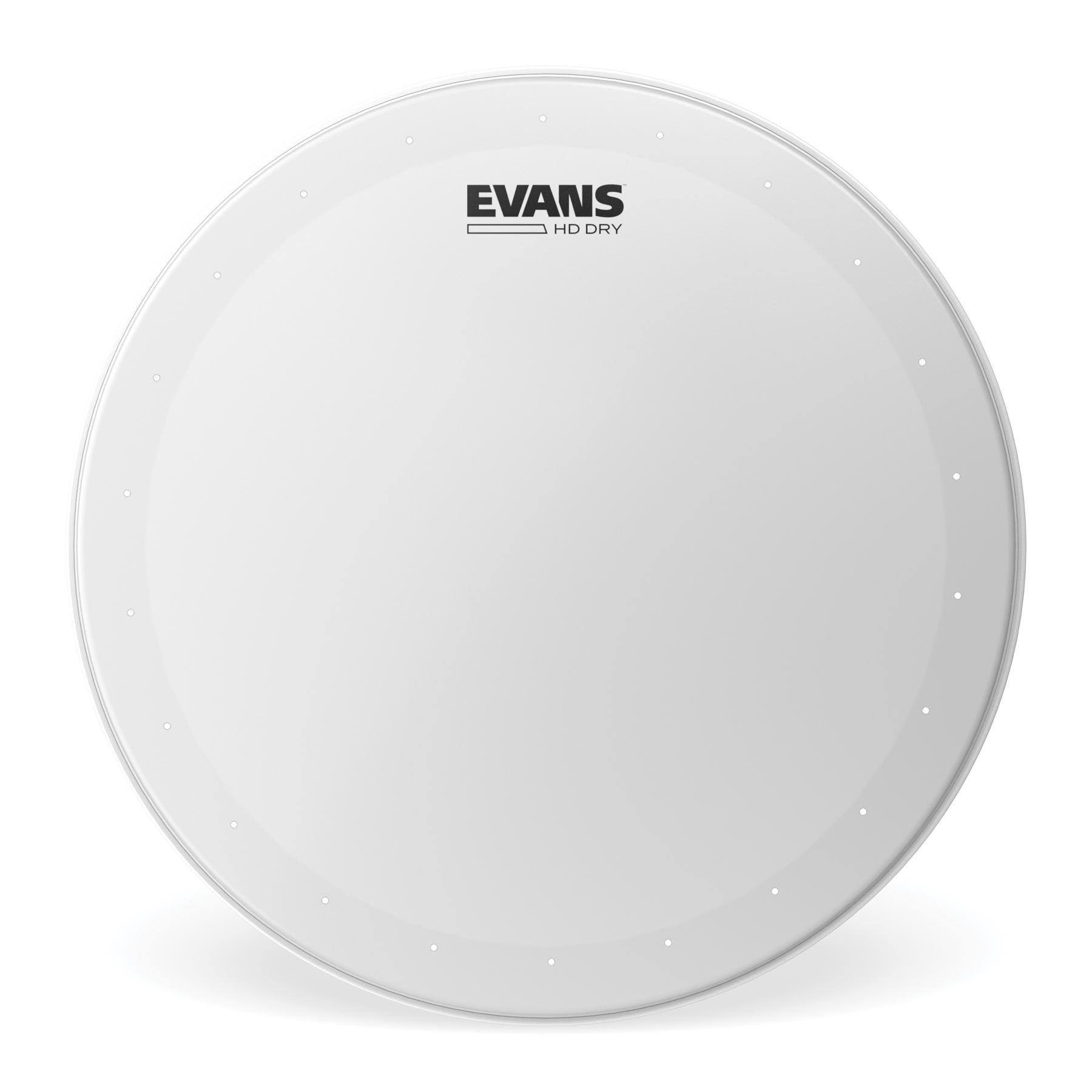
For example, the HD Dry (coated) snare head is one of my personal favorites from the Evans brand. I've used it on countless occasions, across different drum brands. It sounds good in almost all sorts of tunings. Easy to tune, free from overtones, possessing a nice crack and perfect for live settings!
I spoke earlier about the importance of having drum heads that are extremely resilient and break-resistant. It's challenging to find heads that maintain their tuning when transporting a drum kit between cities with different temperatures and humidity levels.
The HD Dry heads are definitely among the best quality drum heads available for reliability. I also think they sound great for high-energy music.
Other popular heads from Evans are their G1 and G2 series. The G1s are single-ply while the G2s are double-ply. These heads work extraordinarily well and the G2s come in coated and clear options.
When I'm comparing drum heads side by side with other brands (especially Remo) for recording sessions, I typically reach for the G1 and G2 series coated heads. They offer a perfect blend of Remo Ambassadors and Pinstripes but with Evans' signature design — delivering a warmer sound while maintaining precision.
These are undoubtedly my favorite Evans heads.
If you’re looking for more control, the Evans EC2 drum heads provide a bigger punch with less sustain.
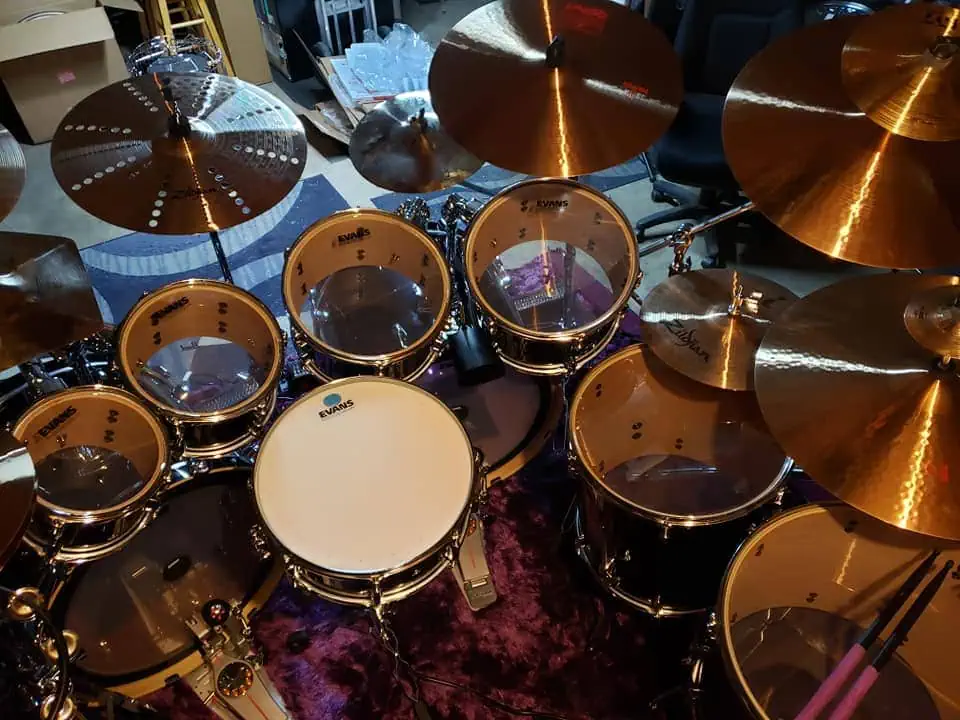
You're seeing Evans HD Dry on the snare, and Evans G2 Clear heads on the toms.
Some famous drummers who endorse Evans products are Anika Nilles, Larnell Lewis, Robert ‘Sput’ Searight, Nate Smith, Omar Hakim, and Dennis Chambers.
Evans heads are great for anyone looking for technological innovation. They sound great because the company has pushed the boundaries of what technology can do for musical instruments.
Importance of Drum Head Choice
Your choice of drum heads is extremely important to your overall drum sound. Drum heads have the potential to completely change the tone of a drum. So, you need to make an informed decision when buying heads.
One easy way of deciding which heads to get is to know what style of music you’re going to play. Rock music requires a big sound, meaning heads that are big and open would work well such as the Remo Coated Ambassadors. The Evans G2s would get a similar effect.
If you’re going to play jazz, you’d need heads that are light with open tones. Jazz toms are typically tuned very high, allowing the tone of the drum to be fully reflected. So, you’d need single-ply heads such as the Evans G1s or the Remo Diplomat Fiberskyns.
Don't be afraid to get creative and tweak the sound of your drum heads. Here's a cool tip — to modify drum head sounds, apply layers of gaffers tape or electrical tape directly to the heads in layered strips. This technique creates a muted sound that works well for hip-hop recordings and vintage-style tracks.
You can also add fabric or foil around the edges of the snare to give more of an illusion of a distressed snare head. This is very useful for electronic music. It gives it an almost high-end distorted sound because of the metallic vibrations of the foil.
For experimental playing both live and in the studio, I prefer Evans drum heads—especially on the snare. They're precise, controlled, and clean, which makes them perfect when you want to add tricks to dirty up or dampen the sound.
Since Evans heads maintain their sound consistently during transport, it's easy to recreate your album's sound for your live performance. That's why I'd choose Evans over Remo if I'm getting experimental sounds in the studio that I want to translate on stage.
They also keep their tuning remarkably well, which brings me to my next topic.
How Important is Drum Tuning?
The final aspect that determines how good your drums sound is how well they’re tuned. Tuning drums is a skill that takes years to develop. You need to have an ear for it to do it well. However, you could also use a tuning tool like a Drum Dial.
In terms of drum head choice, I've found that some heads are easier to tune than others. As stated previously, products like the Evans UV drum heads are a lot easier to tune, meaning they’re a better choice for drummers who aren’t great at tuning drums.
Be adventurous with your tuning skills! While many drummers tune only for comfort and smoothness, there's a whole world of sonic possibilities to explore!
Experimenting with both tighter and looser head tuning can yield fascinating sonic results, especially if you go a bit extreme. While this technique shines best in recording sessions where you can fully appreciate the nuanced details, it's also effective for adding character to your kit during live performances.
Many of your favorite rock drummers tune their drums lower for extra weight, while funk drummers go tighter for that crisp sound. Remember: there's no right or wrong — just what serves the music!
Final Word
Like most musical instrument brands, the choice between Evans or Remo largely comes down to personal preference. Both companies offer similar products that directly compete with each other.
However, every drum head has unique qualities that are very subtle in its sounds.
So, the best thing to do is to try them out for yourself and see which one you like. Just make sure to get drum heads that fit the environment you’re going to play in.

I have tried them both (Remo and Evans) and I’m a fan of evans drum heads. On my (up) Tom’s, I use Evans UV1 G1 heads with regular G1’s on the bottom heads. For my floor Tom’s I use Uv1 G2 heads on top with G1’s on the bottom heads. For my snare I use Remo Powerstroke 3 for the batter head and Evans 300 reso heads on bottom. For my Bass drum I use a Aquarian superkick 2 clear head. Mix and match as you see fit, if you are being endorsed by a drum head company then use what they have. If you’re looking for that sound, use what you like.
My choice of drumheads: Evans
Tom Batter: Clear G2
Tom Resonant: Clear G1
Bass Batter: Emad 2
Bass Resonant: Custom Front Head
Snare Batter: Heavyweight
Snare Resonant: Snare Side 300
I’ve used most.
My choice; Remo.
Toms, Remo clear Ambassadors.
Snare; Remo coated Emperor.
Bass; Remo Power stroke P3 Clear.
Try uv1s and for your bass drum Evans e mad 2 can’t beat this uv1 with reso 7s bottom on toms
I’ve used both brands as well, but I prefer Evans.
Both companies make good products and you can’t go wrong with either or. In my experience however, REMO Heads seem more durable and provide the longevity I need. Peace and Good Will…
I am a drummer of 25 years. (36 years old) and have used products from both companies. I couldn’t agree more with the statements written by you guys in the paragraphs.