
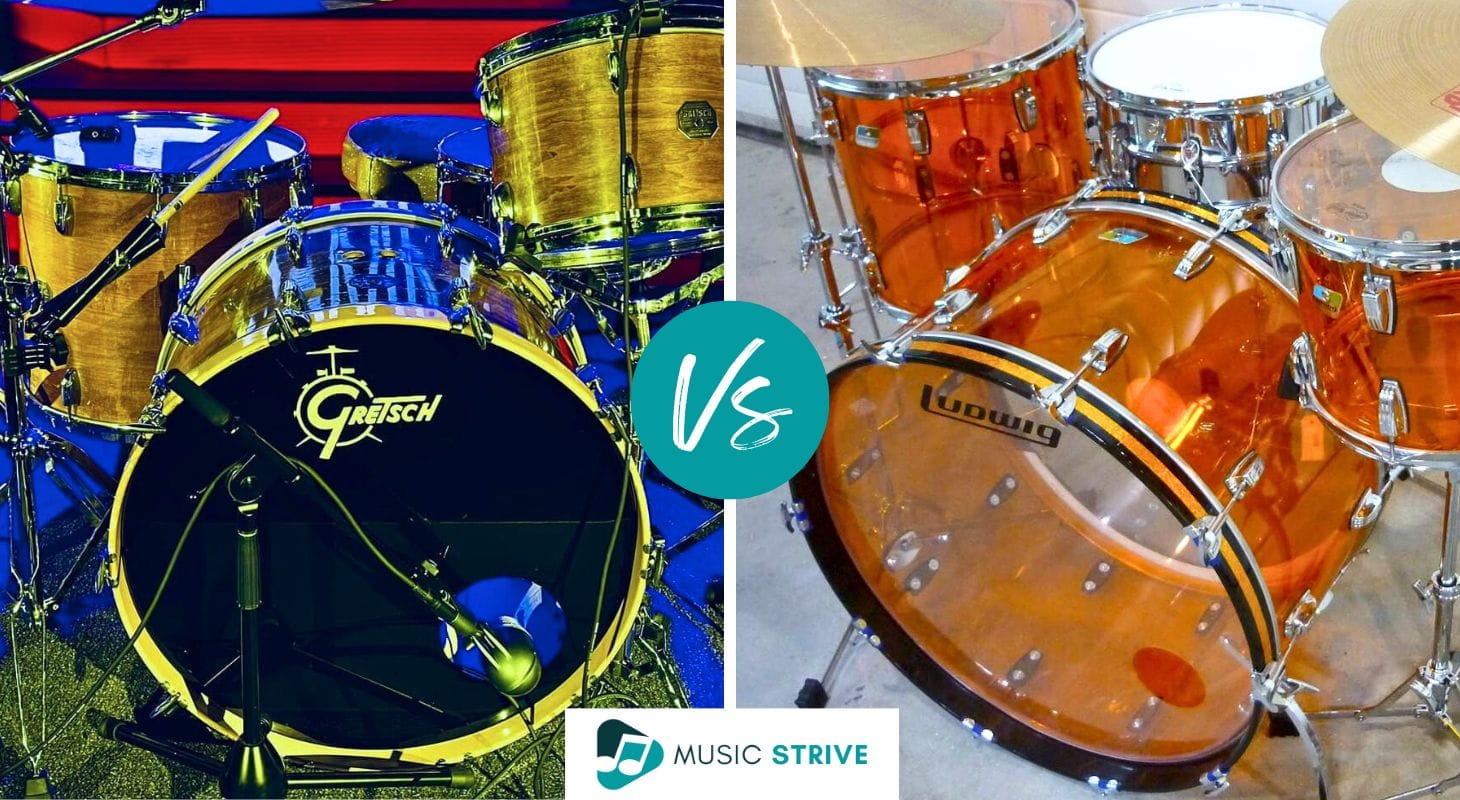
Gretsch and Ludwig both play a huge role in the history and development of the drum set. Both brands have been around for over 100 years and have seen many famous drummers playing their kits.
Whether it was in the bebop era or the modern pop era, you would have seen either a Gretsch or Ludwig drum kit being played somewhere in the world.
What sets these two brands apart from all the other drum brands? Which brand makes better-sounding drum kits? Let’s find out.
Gretsch - Overview
Gretsch was founded in 1883, making it one of the oldest musical instrument companies in the world.
Although the company produces more than just drums, the drum set division gained massive popularity in the early 20th century, thanks to the boom of jazz music.
Top 3 - Popular Gretsch Drum Kits
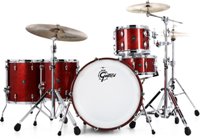

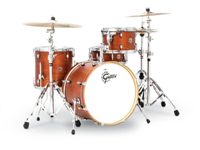
Gretsch drums are typically played by many jazz drummers today, continuing to reflect how well they work in jazz settings. Their natural sound and smooth overtones cater well to the style.
Many Gretsch kits work well for other styles as well. There are several famous rock drummers that swear by Gretsch kits, loving them for their punchiness and boominess.
Gretsch drums use hardware that makes them instantly recognizable. They often pull off a vintage vibe, lending well to the rich history that they have.
One of the qualities that Gretsch drum kits are especially known for is the reliability of their tuning when being hit extremely hard. For any drummers out there, you know how difficult it is, especially for toms, to maintain solid tuning when you're playing high-energy music like pop or metal.
I find Gretsch to have that intersection of reliability and power that kits like Yamaha are mostly known for, combined with years and years of evolution from their early vintage kits to more modern ones.
Gretsch really appeals to powerful drummers who also delight in the warm lows that many vintage kits provide.
Choosing older manufacturers like Gretsch or Ludwig offers a fascinating journey through their evolution. You can hear how premium kits have built upon decades of trial and error, raising the bar with each new model.
Last year I got to work on the soundtrack for a show where we had to re-create different grooves from the '60s to present-day with live drum sets. For that particular project, I brought in two Gretsch kits: a vintage Round Badge series kit from the '60s and a newer Brooklyn kit.
They both had a similar vintage aesthetic to them to the point where they looked quite similar, but they couldn't have sounded more different, especially when you tune the Brooklyn to be a bit tighter and drier for '70s and '80s-style dirty funk.
That's the beauty of Gretsch versatility and sound.
Ludwig - Overview
Ludwig is a bit younger than Gretsch, only being founded in 1909. However, the drum brand gained massive popularity in the 60s, thanks to Ringo Starr and The Beatles.
Ringo became the most famous drummer in the world and suddenly everyone wanted to play on a Ludwig drum kit.
Top 3 - Popular Ludwig Drum Kits
Preview | Product | Price |
|---|---|---|
 | ||
 | ||
 |
Ludwig drum kits are often identified as rock drum sets. They have incredibly powerful tones and the shells are often quite large compared to other kits. It’s not uncommon for a Ludwig set to have a 24” bass drum. Massive.
That's also why they appeal to funk and hip-hop drummers. They have that powerful, warm, low-end bass that almost sounds like a sampled vinyl loop from an Akai MPC or a drum machine.
Look no further than the drummer for The Roots, Questlove, who these days is known more as Jimmy Fallon's musical director. And if you're into hip-hop, you probably know he's the mastermind behind that killer record "Voodoo" by D'Angelo — the groundbreaking album that won multiple Grammys and revolutionized the genre.
On the "Voodoo" album, Quest tuned his Ludwig kit to be very dead-sounding. He aimed to recreate the signature MPC-style vinyl loop sampling sound popularized by his hero, hip-hop producer J Dilla.
Only a Ludwig kit can capture that distinctive warm, jazzy sound with tight precision. Their signature tone naturally lends itself to hip-hop.
Today, lo-fi hip-hop and R&B have emerged as a thriving genre, led by influential artists like Alina Baraz, Sabrina Claudio, and Tom Misch. If you're curious about drum sounds in this genre, check out Splice and type in "Live Lo-Fi Hip Hop Drums," and you'll instantly hear the vibe.
I have a few tracks I've produced for artists in this style, and all of them have been tracked using modified Ludwig kits. By modified, I mean there's a lot of mixing up of hardware and cymbals.
For instance, we'll use toms and snares that usually don't go together (from different kits) and tune them to work well. We also change heads to the right type — usually Remo or Evans, which are the top of the line.
Although Ludwig drums aren’t as popular as they used to be, there are still a large number of drummers in the world who love and play them. Similar to Gretsch, they also have a rich history that would make any Ludwig owner very proud.
Drummers influenced by artists like Questlove and Anderson .Paak have sparked a new revival for Ludwig drums, especially among those who play contemporary R&B and urban styles.
Gretsch vs Ludwig
Flagship & High-end Kits
The Broadkaster has been Gretsch’s flagship kit for decades. It was used by many of the jazz greats in the 1930s and it’s still used by the great drummers today.
The shells are a mixture of poplar and maple, giving the drums a vintage sound that is loud and wide open.
The Broadkaster works very well for jazz and rock settings. You can tune the toms high to resonate freely for jazz and you can tune them low to boom for rock. It’s an incredible kit that represents the highest qualities that Gretsch has on offer.
When paired with the USA Custom Series 14" snare, it's a match made in heaven. Though it's quite a resonant snare compared to many of the more modern designs, it has a cool dryness to it.
I love pitching it down and then taping down the heads a bit to give it a very '70s muffled texture, like a snare you would sample from an old vinyl record.
It also makes the Gretsch kit sound less jazzy and more funk/pop — less Miles Davis and more Michael Jackson "Off the Wall".
The USA Custom kit is another high-end option from Gretsch. It's another solid kit, albeit not as popular as the Broadkaster (that being their flagship kit).
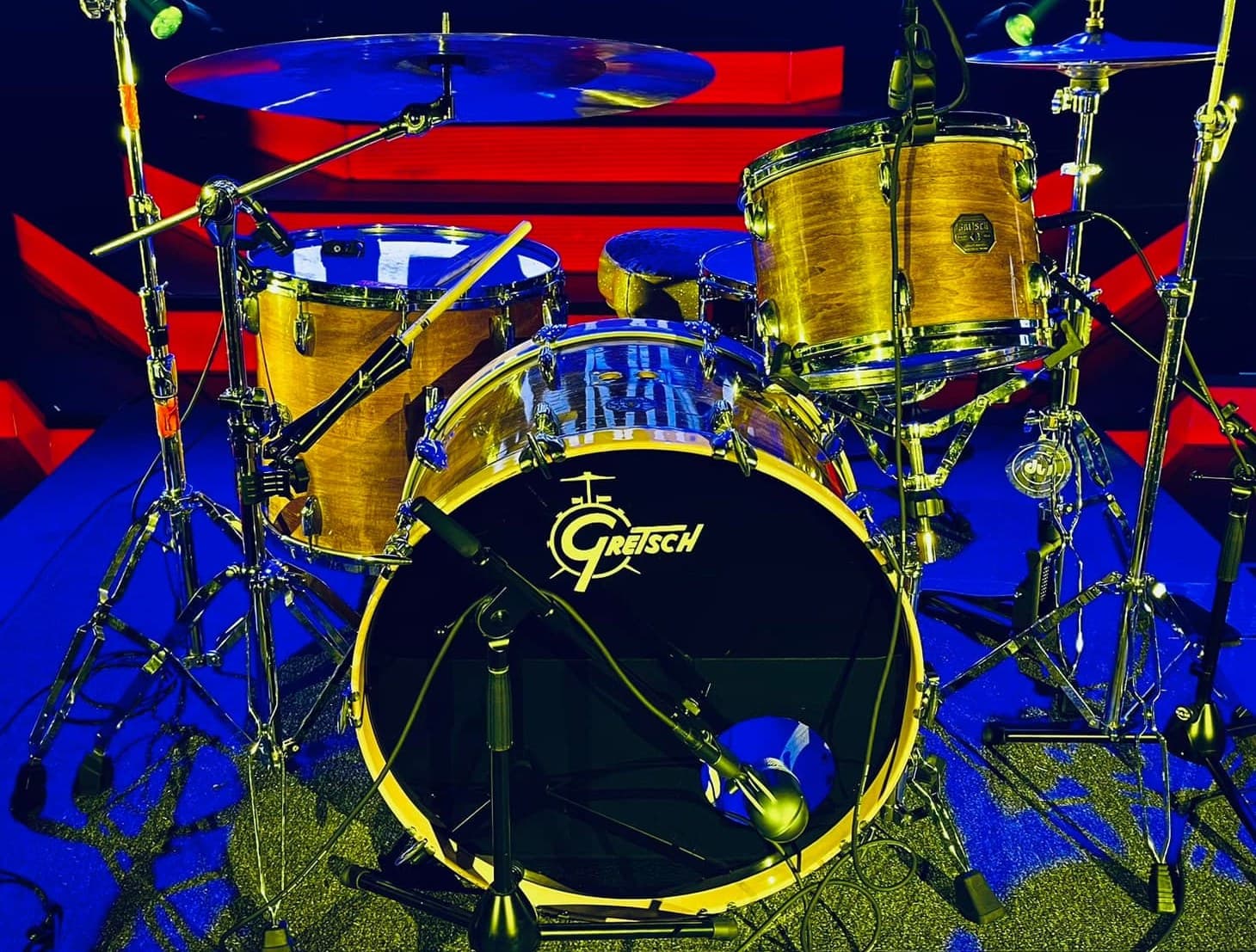
Gretsch USA Custom Kit
The flagship kit of Ludwig is the Legacy Series. Similarly, it also lends the same design as the famous Ludwig kits from the 20th century. The mahogany shells produce wide and warm tones that display a huge amount of low end.
This one is total classic rock. Think Jim Keltner or Ringo from the Beatles, but with a bit more precision. Tons of bass on this one, making it amazing for urban styles.
I recorded with a modified version of this kit about 4–5 months ago. The kit was lent to me by a collector who has a recording studio in the Hollywood Hills.
After I auditioned the kit, I decided it was incredible except for the vintage original snare, so I swapped it out for Anderson .Paak's Pee.Wee signature model and it totally balanced the kit.
This snare is higher pitched and more modern, perfect for today's urban pop and hip-hop grooves. So, I had the best of both worlds: the warm retro three-piece of the vintage kit and a modern, punchy, tight snare.
Two more high-end Ludwig kits would be the Vistalite Zep kit and the Classic Maple Fab kit. The former is an acrylic kit that's ideal for fast, loud, high-attack scenarios such as metal and hard rock. The latter, as the name suggests, gets you a more recognizable maple sound.

Ludwig Vistalite Zep Kit.
Entry-Level Kits
Although Ludwig and Gretsch both have beginner kits that are cheap and packed with everything you need, the Gretsch Energy Series and Ludwig Accent are arguably the least popular entry-level kits on the market.
The real competition comes in the form of the Gretsch Catalina and the Ludwig Element Evolution. These kits wouldn’t be classified as entry-level, but they are very affordable and great kits to have as a beginner or intermediate drummer.
The Catalina is one of Gretsch’s most popular kits. It has a few different variations such as the Jazz Club setup. The drums are made from mahogany, giving them warm and resonating tones.
I have a Catalina at my studio and absolutely love it. I think one of the best choices Gretsch made was outfitting this kit with Remo heads preinstalled.
For one, they really keep the tuning super consistent and precise when you're playing with power, which on a Gretsch Catalina you most certainly will. They also use clear batter heads on the kick, which makes it way punchier.
The Catalina kick is also shallower than other Gretsch kits, making it tighter and less jazzy. This is why I choose the Catalina almost exclusively for modern recording. Punchy, yet retaining just the right amount of subs to blend with modern synth bass styles of music.
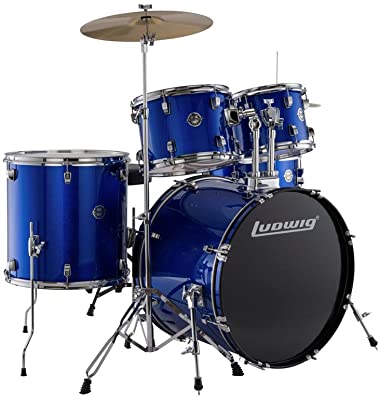
The Element Evolution is an all-in-one package from Ludwig, coming with drums, hardware, and cymbals. It can be classified as one of the best kits for beginners thanks to the Zildjian I cymbals that come with it.
The Element Evolution comes with Remo Pinstripe heads pre-installed. These can stand a beating! Nothing yells "rock kit" like these Remo heads.
One word of caution: the kick on this particular Ludwig is huge — almost like a marching band kick. Tons of resonance and definitely a challenge to tighten up. It works well for rock and fusion jazz but not great for faster-tempo metal or modern pop styles.
For kids, there's an excellent entry-level Ludwig kit created with Questlove. The Ludwig Questlove Pocket Kit — a collaboration with the celebrated drummer — delivers a warm, punchy sound with an urban feel that's perfect for young drummers.

Ludwig Questlove Pocket Kit
You get a Ludwig 4-piece kit at a great price, and it comes with ride/crash cymbals and hi-hats. I wish this had been around when I started!
Everything in Between
Both brands of drums have extensive product lines full of high-quality drum sets. Two notable ones would be the Ludwig Breakbeats and the Gretsch Renown. These kits are vastly different from each other and offer very specific qualities.
The Breakbeats is a compact kit intended for traveling and gigging. The drums are small and the hardware is light, making it easy to carry around and set up quickly. The hardwood shells make the drums sound surprisingly good.
Kits like the breakbeats are also called "cocktail" kits and have a smaller, tighter sound, which is perfect for experimenting with creative drumming.
I love sampling loops played on these types of kits because they sound kind of processed. Almost like you pitched them up artificially on a sampler, but in a cool way.
They've become pretty popular with indie and psychedelic rock bands that incorporate a lot of loops and sound design into their music.
The Gretsch Renown is a pro-level kit that costs just over $1,500. This makes it very affordable compared to other pro kits that are north of $2,000 or even $3,000. It’s a maple kit that has versatility as its standout quality.
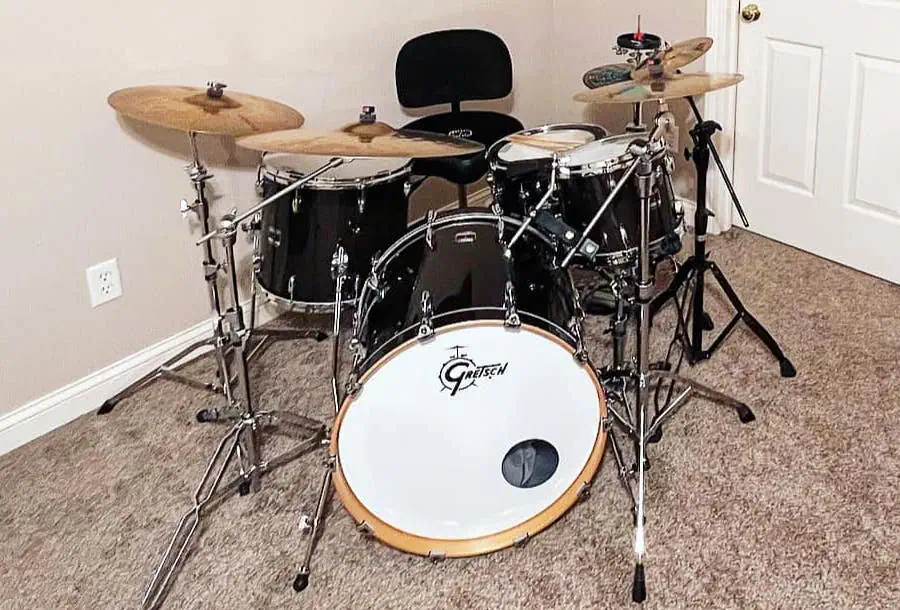
Gretsch Renown
Whether you’re playing on live stages or recording in studios, the Renown will do a fantastic job. It's unashamedly retro both in sound and look, and truly captures the earlier Gretsch sonic legacy beautifully.
Artists
Since both brands have been around for so long, they’ve had many of the greatest drummers of all time play on their drum kits. Some of the drum legends who played Gretsch kits were Tony Williams, Elvin Jones, Max Roach, Philly Joe Jones and Taylor Hawkins.
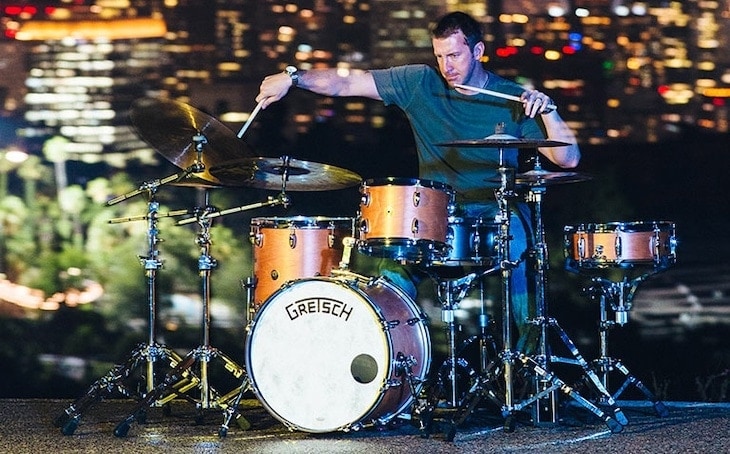
Mike Johnston Playing a Gretsch Drum Kit
Current famous drummers who endorse Gretsch are Mike Johnston, Mike Guiliana, Keith Carlock, and Stanton Moore.
Although Ringo was the main catalyst for Ludwig’s popularity, another wildly famous drummer that boosted their brand was John Bonham.
He’s arguably one of the most well-known rock drummers to have lived, further raising Ludwig’s association with rock drumming.
Current drummers who endorse Ludwig are Vinnie Colaiuta, Carmine Appice, Jason Bonham, Frank Beard, and Nicko McBrain.
I've touched on Ludwig's growing influence in modern urban music, which has significantly expanded their market reach. Since urban music often relies on programmed beats and drum machines, the masterful musicianship and sound of artists like Questlove and Anderson .Paak have served as a powerful endorsement for what can be achieved playing real kits.
Especially Anderson, who you know from his solo material but probably even more from his collaboration with Bruno Mars to create the Silk Sonic duo. They've released multi-platinum singles like "Leave the Door Open," which won 4 of the top Grammy awards in 2022.
The song is a mix of retro Marvin Gaye vibes with modern production, perfectly illustrating the high demand there is for these types of drum sounds in modern pop and soul.
Besides being a great drummer, Anderson .Paak has become a bit of what Phil Collins was in the '80s — the singing artist who is also the drummer. Very few artists in pop have accomplished singing from the drum throne with success, and fewer still have done it in urban music.
So the pattern of artists like Mark Ronson with "Uptown Funk" and Silk Sonic having such massive success reviving these Ludwig and Gretsch kit-style soul beats is very good news for these drum companies.
Add to that the aftermarket loop industry that makes sample packs of these popular styles, and you'll see how it truly is a revival for a brand new vintage drum era.
After all, to truly make legit sample packs for Splice or Loopmasters in these artists' styles, you have to either own some of these kits or hire drummers that do.
Recording and Loop Production
These days many drummers (myself included) make most of our money recording remotely as freelancers on sites like Soundbetter or Airgigs. The process is straightforward: get hired, receive files or a DAW session via chat, record the beats, and collect payment.
I've also started having a lot of sessions creating loop sample packs for popular sites and third-party companies, including Native Instruments.
Those of you who are doing this type of work know that it's highly competitive and specialized—we're even categorized by specific genres in the search engines. For Rock, Metal, and Jazz, most bases are covered, with many proficient drummers already getting plenty of work.
However, there's less competition in funk, hip-hop, and electronic genres, so consider branching out to differentiate yourself and secure more gigs. Let these new sonic possibilities spark your creativity—and remember that a vintage Gretsch or Ludwig kit might just be your edge in the market.
I can confidently say these brands are essential additions to your arsenal. The only question left is how to decide?
My Final Take
The answer to which drum brand has better-sounding kits is a subjective one. While Gretsch drums are often associated with jazz and Ludwig kits are associated with rock, they both have kits that work well in those styles.
There are plenty of rock drummers playing Gretsch kits as there are several jazz drummers playing Ludwig kits. With both brands having rich histories in drum manufacturing, they both have great construction processes that lead to excellent drum kits.
While Gretsch has the Renown kit that is great for pros on a budget, Ludwig has the Breakbeats kit that is fantastic for easy gigging. I’d suggest checking both brands out to decide which drum kits you like better.

Love both and I played classic rock I’ve been playing for 58 years. And just love playing both. Now cymbals are a whole other thing.
Elvin Jones; Tony Williams; Charlie Watts; Taylor Hawkins; David Scally Jr. – all are great drummers of taste, and they all play(ed) Gretsch Drums.
If it’s good enough for John Bonham. It’s good enough for me.
Ludwig for the vintage sound and well built.I also love the the 80’s deep tom’s
I have now retired from a long career of drumming and I respect all of the above comments, but for me it has always been ludwig drums, they did everything I asked of them. God bless WFL.
Regards, Roger. UK.
I’ve been using gretsch for 60yrs. That great gretsch sound has converted ludwig players, some over to gretsch. The brooklyn stands out ! But renown holds its own. Have a 1950s brooklyn ! Won’t sell. Been offered big bucks but hell no !
My very 1st kit owned was Ludwig which I loved very much. I truly wish I would have not sold those. I currently own Gretch Catalina Club kit with the extended bass drum. Played so many stages with this kit & love it! In conclusion it is a very hard pick between the two. Both are very great companies that I would recommend.
When you’re looking for that big, bad Hard Rock sound, deep powerful tones that can cut through anything, Ludwig is my choice. Just listen to Kiss, Eric Carr, Creatures of the night Album. Nothing but Thunder!! Big Tip of my hat to Grestch!! They make unbelievable drums!! But for my ear it’s Ludwig Classic Maple. Peace to my fellow skin bashers!!
For the record, for his entire long and prestigious career, Vinnie Calaiuta has played Gretsch drums, except for less than a year in 2012-13 during which he briefly signed with, then shortly afterward abandoned Ludwig to return to Gretsch. So he’s clearly made his preference known!
I have to agree. I’ve played Ludwig, Slingerland, Rogers, Sonor, Tama, Yamaha, and Pearl kits, and while they’re all good, I LOVE my Gretsch drums: both my Vintage ’60s drums and my new Renown 2 kit. Would not trade them for any of the above!
Three great drummers who play (ed) Ludwig: Joe Morello (deceased. Dave Brubeck Qut), Nate Smith (bandleader of Kinfolk), and Carter McLean (was lead pit band drummer for the musical Lion King)
I’ve owned Slingerland, Tama and Ludwig kits, and they were all well built, good sounding drums, but when I purchased a Gretsch kit, I acquired the best sounding kit that I’ve ever owned.
Gretsch! Definitely #1. I’ve been playing for 60 years now, and have played on many drum kits. Ludwig, slingerland, roger’s, dw, sonor, percussion plus, pearl, Tama. Price value. Bang for the buck! Still Gretsch still the better. Even if all the brands just mentioned! If they gave me what ever I wanted for “Free”! My first choice would be “Gretsch”! The best sounding Drums
Ever! So if you are reading this,and considering a set ? Whether you’re just starting out, or been at it like myself! Consider this! It’s not just about price. If you intend to commit to playing for a lifetime, or just a hobby. Do your homework! Check out all brands, and then make a decision! Because they are not CREATED equal! You wouldn’t buy a car with out checking it out, and driving it.
Would you? No! Why would I buy a set of drums that cost $6000.00 if I can’t test them! Look at what your buying very carefully! You get what you pay for! Do your homework, and compare. I love my Gretsch, and swear by them! They won’t let you down! Only you can! Just like the music! It will never let you down, only you can do that! Sorry for being so long winded! Be well stay safe, and God Bless.
Since when has Nicko Mcbrain played Ludwig? He also currently plays BDC (British drum co).