
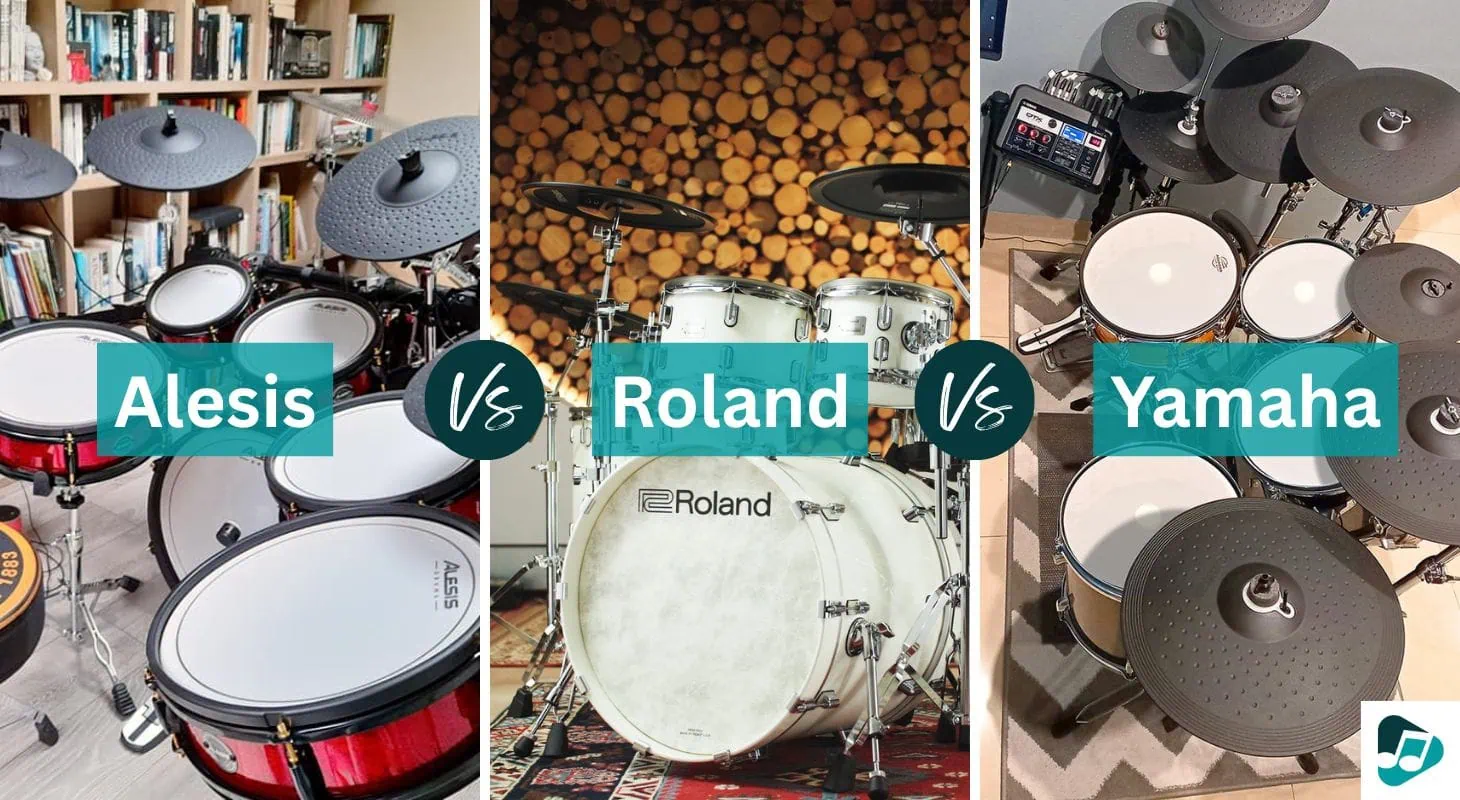
If you want an electronic drum kit, your main options are going to be kits from Yamaha, Alesis, and Roland.
These are the leading electronic drum brands in the drumming industry, and you’re likely to find their products a lot easier than you will any others.
What’s the difference between kits from each brand, though? I'll try to cover that in a concise way, based on years of ownership, playing experience as well as recording experience with plenty of E-kits from each of the big 3.
Table of Contents
- Best Electronic Drum Brands
- Reliability
- Which One is the Best Budget Electronic Drum Brand?
- Can I Use an E-Kit to Expand My Acoustic Setup?
- Which Brand is Better for Higher-End Electronic Drum Kits?
- Who Makes Kid-Friendly Models?
- Why Buy an E-Kit over an Acoustic Kit?
- Can You Make Cheap Electronic Drum Kits Sound Better?
- When in Doubt, Build a Hybrid Kit!
- Closing Thoughts
Best Electronic Drum Brands
Electronic drums are an interesting aspect of the drumming niche. They cost a fortune a decade ago, and only the most expensive ones sounded any good. As technology has evolved, so have the drum kits made by electronic drumming brands.
At this point in time, you can easily find an electronic kit at an affordable price that is more than good enough to learn and practice on. Many of them are even good enough to play professional live gigs with.
Deciding which electronic drum brand to go with will determine which sounds and settings you may get. Not all drum brands use the same sound and construction technology, so you’ll feel a noticeable difference between different sets from these brands.
Pricing structures are also slightly different. While Yamaha and Roland tend to stay competitive with each other, you’ll see that Alesis tends to price their kits a lot lower. While that may make you want to choose them over the other brands, you should weigh up all the pros and cons of each before making that decision.
Alesis
As I alluded to earlier, Alesis is the most affordable electronic drum brand. They’re one of the only brands that offer entry-level drum kits that have mesh drumheads.
Mesh heads are used instead of rubber on e-drums, and they make the pads feel a lot more natural. You can also tighten them to get your preferred amount of responsiveness.
The amazing thing about Alesis is that they have several electronic drum kits on offer that are relatively similar in price. So, if you have a set budget, there are multiple kits to choose from within that budget.
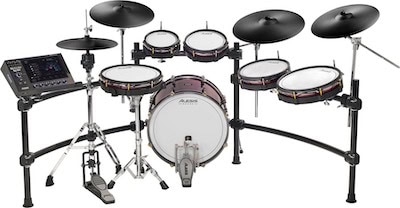
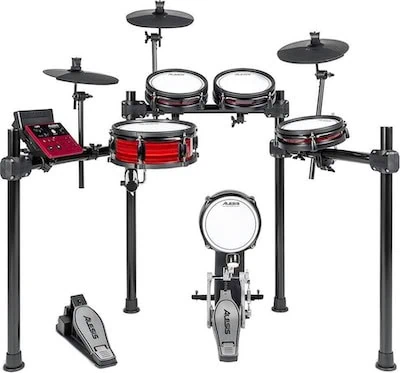
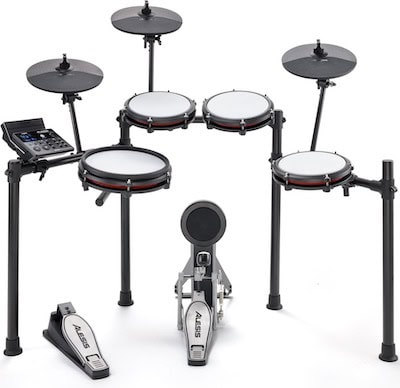
Top 3 - Alesis Electronic Drum Kits
Preview | Product | Price |
|---|---|---|
 | ||
 | ||
 |
When it comes to their mid-tier and high-end kits, all the drum pads are quite large. It’s common to get an Alesis set with 10” drum pads, whereas other brands will have pads as small as 6” on competing sets.
The downside of Alesis drum sets is their sound quality. While all the modules are very extensive, the sample sounds don’t sound as good as the ones from Roland or Yamaha. Out of all the Alesis kits I’ve played over the years, only one has ever made me think that I could possibly use it for a live gigging scenario.
Sample quality in drums is largely subjective, though. I remember owning both an Alesis SR-16 and HR-16 drum machine years ago. While the samples weren't particularly realistic, these drum machines have since become iconic in dance music.
I view their electronic kits similarly—despite not having the best feel or sounds, they carry forward the legacy of those early drum machines. The genre of music you're playing ultimately determines their suitability.
To their credit, Alesis partnered with BFD Drums, one of the world's premier drum sampling companies, to include portions of the BFD library in their Nitro Max.
While BFD drums are expensive and require a separate VST purchase for full sound control, Alesis includes their desktop app at no cost. They've even added Bluetooth audio for playing along with computer tracks!
These features are especially important for beginner drummers looking to get started with electronic kits, as it means the sound quality becomes less of a concern. Another reason why Alesis kits are such great options for first drum sets.
Roland
Roland is the top-dog electronic drum brand. This is no surprise, as they've always been electronic sound pioneers, creating iconic drum machines like the TR808 and 909 that shaped the sound of the '80s and '90s — and are still used today.
Good luck finding five dance or hip-hop songs from the '80s that didn't use one of these machines. You can still hear them on rap hits around the globe.
So yes, they’ve been paving the way for decades, and there’s no sign of them stopping any time soon. Most of the design features that you see on modern electronic drums started with Roland kits. The brand invented the mesh head, and that changed the history of electronic drums.
High quality comes with a high price, though. Roland e-drums are known to be quite expensive. Out of all their products, only a few of them cost below $1000. So, you’ll need a fairly sizable budget if you want to buy a Roland drum set.
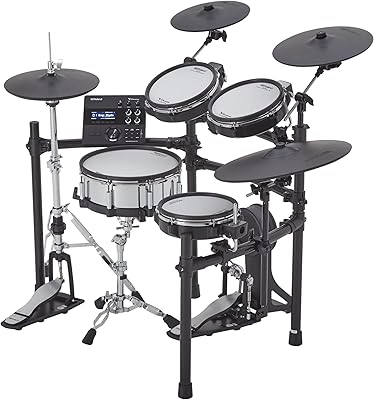
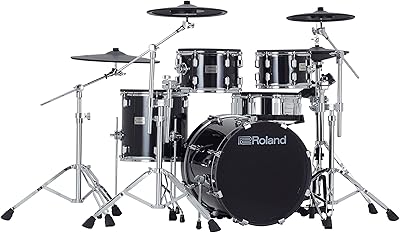
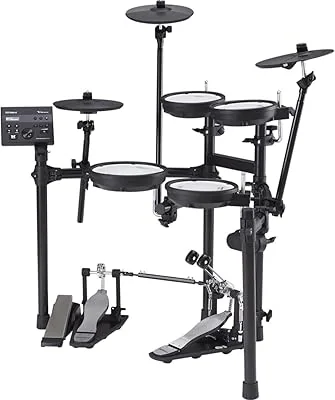
The brand splits their products into two lines of drums – the V-Drums and VAD line. The V-Drums are the classic electronic drum kits that most people associate the brand with.
The VAD line consists of acoustic drum shells that have electronic drum pads connected to them. The VAD drums are meant to look like classic acoustic kits, but they have all the benefits of electronics.
Another pioneering breakthrough that makes Roland so special when it comes to electronic drum kits is the creation of their PureAcoustic Ambience technology, which was introduced on models developed from 2016 onwards. This was a total game-changer for the sound of electronic drum kits.
You see, one of the biggest complaints that most people had (especially drummers) was that even hitting advanced mesh pads didn't quite give you the air or room sound that came with hitting a physical drum. So, in a way, the PureAcoustic technology added the equivalent of the resonance of the body of an acoustic guitar.
So, it made it a lot less dampened and dead. It's the same principle that electric piano makers added to make the stringless, lifeless body of upright digital pianos come to life.
I've recently had an Alesis kit and a Roland kit with the PureAcoustic technology in the studio using the exact same recording chain, and the difference, both in feel and sound, was staggering.
Something important to mention about Roland is that all their products have incredibly high resale value. Selling a used Roland kit is a lot easier than selling one from Alesis or Yamaha. This also means that you can arguably find more good deals on secondhand kits than any others.
Yamaha
Yamaha is one of the most popular brands in the world. They offer a wide array of musical instruments, and their electronic drums form only a fraction of those choices. They’re the only brand here that also make acoustic sets, and their acoustic sets are all incredible.
The cool thing about that is that all their electronic drum samples are taken directly from their extensive line of acoustic drums. If you love the sound of a Yamaha Tour Custom kit, you could play with one on a Yamaha electronic drum set.
The brand recently did a complete overhaul of their electronic drum kit line, making it a lot more streamlined and easier to understand. This is my favorite aspect of Yamaha’s electronic drums, as each higher-tier kit has clear improvements over the one just under it.
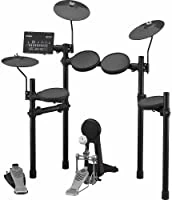
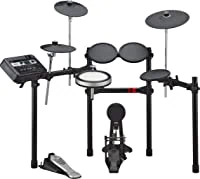
Most of Yamaha’s electronic drum kits use the brand’s TCS pads, which are silicone drumheads. They perform quite similarly to mesh heads, but they feel a bit different. Some drummers prefer them, while others opt for mesh heads instead. The brand’s latest flagship kit, the DTX10K, has the option of coming with mesh heads or TCS pads.
You know what's really tricky with electronic drums and their included kits? Getting those hi-hats and cymbals to sound natural!
Speaking of cymbals, Yamaha's really knocked it out of the park with their DTX6K5 three-zone cymbal pads — they're way ahead of Roland when it comes to making rides sound like the real deal.
Last month, I had the incredible opportunity to test the new DTX6K5-M with its pro module — and it blew me away. I was so impressed that I immediately pre-ordered it from Sweetwater when it became available. If you're picky about cymbals, you'll want to grab one too — this drum set module offers outstanding value for its price.
Speaking of pricing, many of Yamaha’s kits are in close competition with Roland. However, the brand takes the middle ground, as Roland’s flagship kits are a lot more expensive than Yamaha’s. Additionally, I believe the value of their improved kits will attract many customers who might have otherwise chosen Roland.
Reliability
Reliability is incredibly important to think about when buying electronic drum kits. Due to the nature of digital gear, these types of drums don’t last as long as acoustic drums do. But it’s good to know which brands are the most reliable, as you want to make a good buying decision.
I’ll start off by saying straight away that Alesis kits are the most unreliable out of the three brands. The company has a bit of a bad reputation for quality control issues, and the lower-priced Alesis kits tend to develop more faults than any drummer would like. Their hi-hat triggers are particularly bad.
However, when getting an inexpensive electronic kit, you’ll probably find yourself wanting to upgrade within a few years anyway. So, the lifespan of the affordable Alesis kits is more than enough for most drummers who start out with them. This just means that you may struggle to sell the kit after you’ve moved on to something better.
The higher-end Alesis kits are a lot more reliable and durable, so don’t worry too much about these issues if you choose to go with one of those.
Yamaha comes next on the reliability chart. Their kits are built to last, and you can feel it when you play them. However, you may struggle to find support for the Yamaha kits that have been discontinued. All the newer ones are excellent, though.
Roland wins the round here. The brand is famous for their long-lasting kits, and that’s why the used market for Roland sets is so big as well. Roland drum sets are built amazingly, and they maintain their quality for years. If you run into issues, Roland’s customer support service is excellent.
Which One is the Best Budget Electronic Drum Brand?
Alesis is, without a doubt, the best budget brand. They have several kits that cost under $1000, and all of them have large pads with mesh heads.
If you’re a beginner drummer with a small budget, I’d happily recommend any Alesis kit. Their entry-level Nitro Max Mesh is incredibly popular for a good reason.
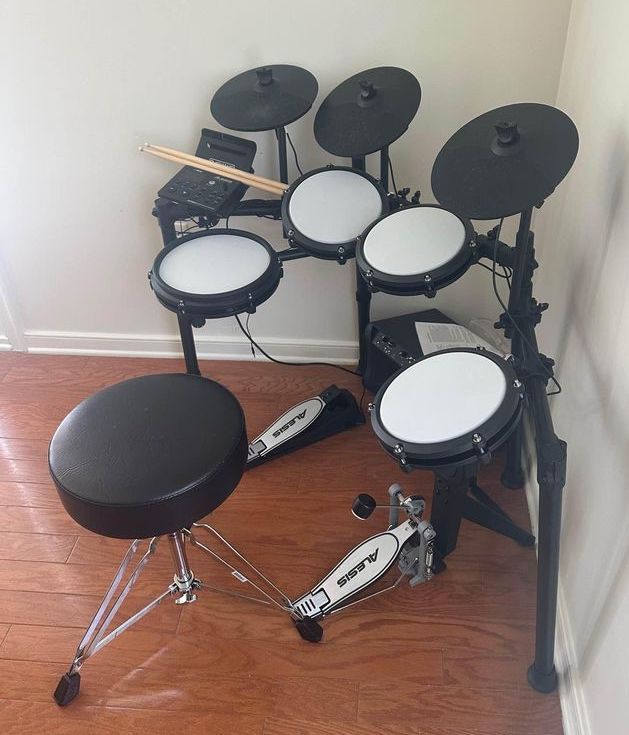
Alesis Nitro Max Mesh in action.
However, know that you’re not going to get the greatest sounds or quality control from the brand with cheaper kits. They’re fantastic for learning, though.
I wouldn’t consider Roland and Yamaha as budget brands because their bottom-line entry-level kits are missing kick pedals. Their most affordable sets have kick triggers, which don’t give you the same feeling as playing an actual bass drum.
If I were to recommend a beginner kit from those two brands, it would be the next step up in each line, and those kits cost around $700. I wouldn’t classify that as affordable!
Alesis also wins here because their high-end kit is almost half the price of Yamaha’s and Roland’s high-end kit. The Alesis Strata Prime is an incredible drum set, and it’s more attainable for pro drummers with a smaller budget.
Can I Use an E-Kit to Expand My Acoustic Setup?
There's also an incredible opportunity in using Alesis kits as secondary kits for studio work.
Just the other day, I was in a session with a drummer who had a beautiful Gretsch vintage kit set up, and on the side of that, he had an Alesis Command Mesh Kit, which I should say is one of their budget kits.
When I asked him why he had such an expensive acoustic drum kit yet such a cheap electronic one, he explained something very interesting: sometimes when you're playing certain genres of music like pop and hip-hop, you don't want to have the full dynamics of an acoustic drum set.
Therefore, playing a very sensitive bunch of expensive pads makes little sense, since producers and artists sometimes just want a drummer to trigger a customized kit of "one-shot samples."
One-shot samples are essentially WAV files that you load into a sampler or, in this case, an electronic kit. They don't vary in tone if you play them softer or louder — they're just the same sample, but a drummer can play them with a human feel versus programming them in MIDI.
During the session, we did do a track where he tried playing the pattern of a dubstep-style track on the acoustic drum kit, and it just didn't work. But when we loaded all the premade samples that we had in that style onto the Alesis... game on!
So if you're a drummer who wants to be as versatile as possible but also doesn't want to break the bank with one of the more expensive drum kits, then getting a cheaper Alesis drum kit just to trigger samples is a great way to go.
Which Brand is Better for Higher-End Electronic Drum Kits?
Roland and Yamaha are in tight competition with their mid-tier kits, but Roland’s top-end kits are the winners for me. Nothing comes close to the TD-716 and VAD716 kit. Both kits are powered by the V71 drum module, which is the most intricately fantastic drum module on the market. Just note that both those kits cost around $8,000. They’re elite drum kits with elite price tags.
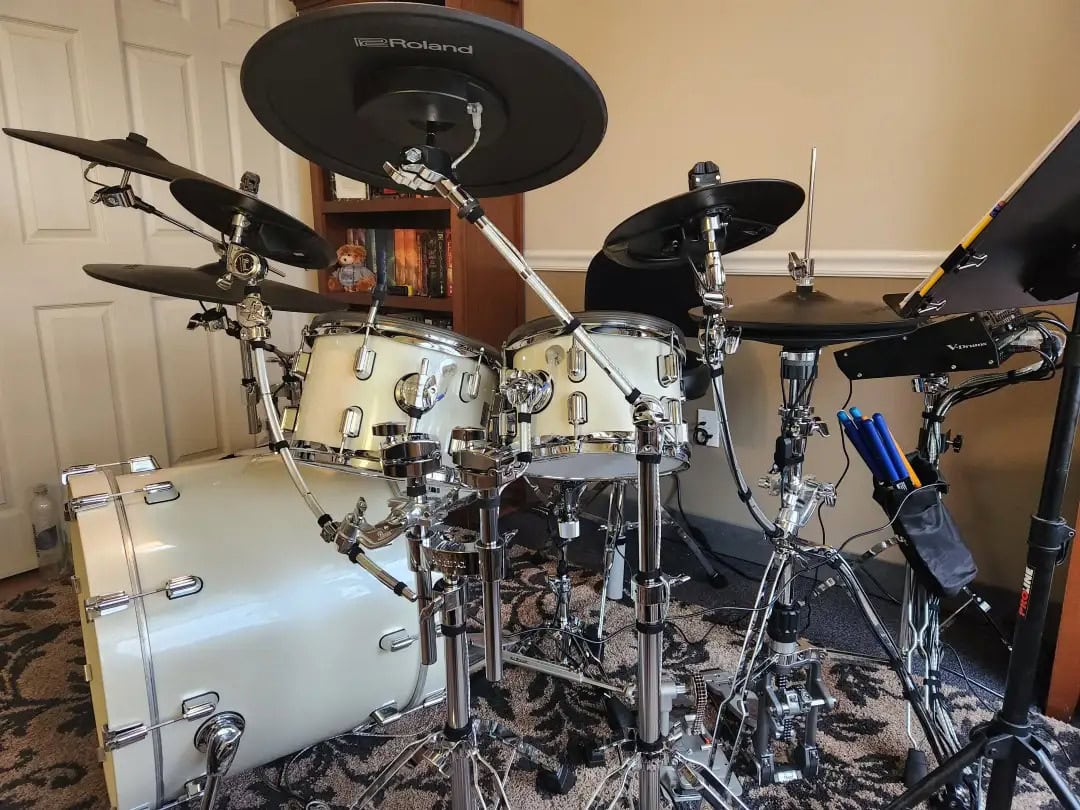
In photo: the Roland VAD706 (older gen.) and current gen. VAD716 and TD-716 drums are true high-end e-kits costing close to 8 grand!
Roland has a few lower-spec kits that are still considered as high-end. Their TD-27 kit is more than capable of handling any professional setting, and the TD-17 kits are perfect for intermediate drummers.
While Yamaha’s top kits aren’t as good as Roland’s, many people prefer them, mainly thanks to the lower price tags.
Who Makes Kid-Friendly Models?
All three brands make electronic drum kits that are suitable for children. However, I’d recommend the Alesis Nitro Max Mesh kit more than I would any other. It’s a standard kit, but it’s a lot shorter than any other full-sized electronic drum kit that I know of. This makes it the perfect option for a child. Since it’s a standard kit, a child is also able to grow into it as the years go by.
Roland sells the TD-02K, which is a suitable kit for a child. However, I’d still recommend the Alesis kit over this one as the Alesis has more standard drum kit aspects.
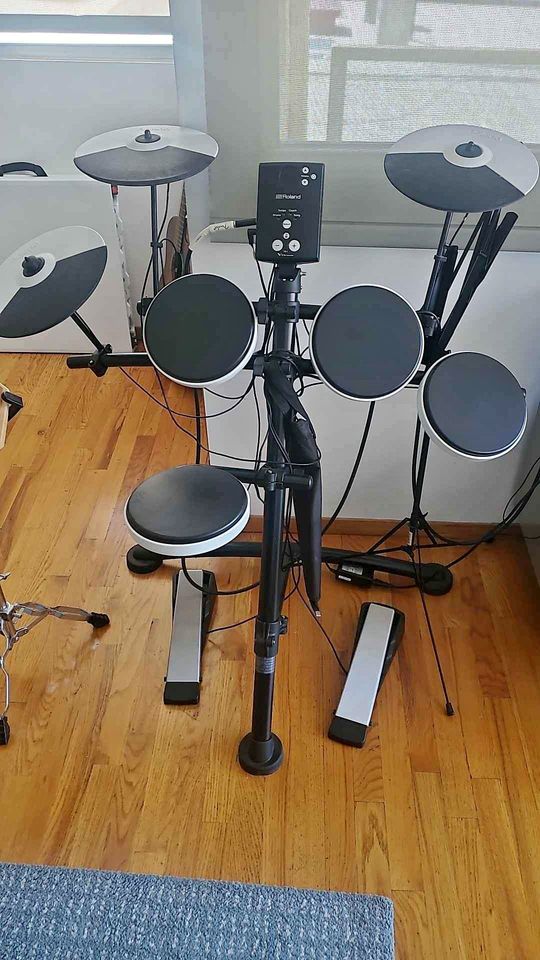
Roland TD-02K in action.
Yamaha’s DTX452K is similar, but I found that it can’t be positioned as low as the Alesis and Roland sets.
While those kits are all suitable for kids, they’re also usable by adults. You don’t get pure children’s electronic drum sets as you do with acoustic sets.
On another note, if budget isn't a concern and the kit fits, I recommend the Roland brand for its realistic cymbals and hi-hat.
Roland nears Yamaha in cymbal quality and surpasses Alesis. Several friends living in smaller homes have asked me about this — their children want to join bands as drummers, but since both parents work from home, they're concerned about the noise from an acoustic drum kit.
When they ask about electronic options, I emphasize that developing drummers need the most realistic feel possible, especially for cymbals and hi-hats.
My suggestion is to build a hybrid kit, which I'll discuss in detail below.
Why Buy an E-Kit over an Acoustic Kit?
As a drummer myself, I know there's a big difference between the drum sounds on the records you love and what you can achieve in your personal studio.
I consider myself a decent engineer, and I've recorded many drum sets professionally, but sometimes the acoustic environment isn't right or you simply don't have the budget for proper hardware and microphones to capture an incredible drum sound — even with the best kit in the world.
That's just reality. There have been times when I wished I had used an electronic kit triggering a professional VST instead of the drum sound we achieved after hours of sweating over microphone placement in the wrong room.
Another situation where an electronic kit can be indispensable is during rehearsals. Many people have this utopian vision of a rehearsal room where everyone's jamming at full energy, the singer is hitting those high notes, and everyone's having a blast.
However, especially when working with singer-songwriters or more timid, softer singers, I often have to hold back on my drumming power. This not only affects the sound of my drum kit — particularly when we're playing or touring an album I've recorded — but it also changes my feel.
During rehearsals, it's not always about the drums — in fact, it usually isn't! It's about helping the singer or artist feel comfortable performing their material before sharing it with an audience. Sometimes you need to practice quietly, even with headphones.
For these situations, an electronic kit is indispensable.
Can You Make Cheap Electronic Drum Kits Sound Better?
Yes, but it takes a bit of working around. The quickest way to make an electronic drum set sound better is by tweaking the audio settings on the module. Most entry-level sets don’t come with this feature, though. You should first check if it does. If it doesn’t, you can move on to the next step.
Now comes my favorite way to get great sounds without shelling out a ton of money on an expensive e-kit. Guess what, you can simply connect the drum module to your computer and run a VST (Virtual Sound Technology) program!
Since electronic drums can trigger MIDI notes, the VST will replace the onboard sounds with its own every time you hit the drums. VST sounds tend to sound a lot better than onboard module sounds, as they’ve been specifically designed for this purpose.
You’ll need to buy a VST if you want to get the best sounds possible. Some popular ones are Addictive Drums, Superior Drummer and EZdrummer.
Just note that you’re going to be limited by the quality of the drum pads that you’re using. While the standard trigger sounds will get better, the responsiveness of the pads won’t. You’ll only get intricate musicality from the pads when using a higher-end electronic kit.
When in Doubt, Build a Hybrid Kit!
Now that we've gone through the pros and cons of owning an acoustic drum kit versus an electronic drum kit and all the brands that go along with it, there is one more solution that has always made sense to me, and it's what I've done in many cases, both for studio and live work: combining an electronic drum kit with live cymbals.
Now you'll ask, "But didn't you just say that Yamaha had incredible cymbals, and also, don't you play through headphones, so can you really hear the cymbals the same way?" etc.
Yes, Yamaha and Roland do have quality cymbals, but nothing could possibly capture all the variations in both feel and sound of playing a live hi-hat and live ride. The reason is that sampling technology still can't capture enough dynamic levels to truly give you all the possibilities.
So my argument is: Keep the kick, snare, and toms on pads, add real live cymbals. What? Well yeah, the three in question don't usually need to have that many variations — as long as there's a soft, mid, and loud sample to hit and it's a decent snare, most drummers play either loud or soft most of the time. Toms are the same way.
They usually match the dynamic of whatever the kick and snare are doing. Then there's also the issue of why most people get electronic kits, which is because an acoustic drum kit can be very loud in small spaces like homes and project studios.
Cymbals, besides the crash of course, can be a lot easier to tame. They also cut through just fine over headphones. So not only does it give you a better live feel, but it's also fairly easy to close-mic hi-hats and rides and match them to your e-kit module.
When it comes to taming the crash, it's easy — learn to play it softer. That's actually a very valuable studio recording skill as well.
I've seen many bands on stage use this combination very effectively. It gives you the reliability of knowing that your hi-hat sound will not vary from kit to kit, and it also increases projection through front-of-house speakers.
In my studio and live hybrid rig setup, I use smaller cymbals like the Meinl 20" HCS Ride and Meinl 13" HCS Hi-hats.
The Meinl HCS line is very affordable yet delivers a great consistent sound.
Closing Thoughts
All three brands have their pros and cons. The great thing is that they cater to a wide array of drummers.
If you’re just starting out and you have a small budget, an entry-level Alesis drum kit will be your best option.
Yamaha has plenty of mid-tier and pro-tier kits that you may love. They all use the famous Yamaha acoustic drum sounds.
You can never go wrong with a Roland kit. The quality and durability they have are unmatched. You’ll just need to be prepared to pay a slightly higher price.
Weigh up all these factors and choose a brand that resonates most with your current situation. You can always go with another brand on your next kit purchase if you want to switch things up.
Before I let you go, let me share an amazing piece of wisdom that one of my favorite drummers passed along when we were chatting about getting an electronic kit for my room. With a big smile, he told me, "Technology is all about unleashing your creativity while keeping a smaller footprint!"
Curious to hear more, I asked him what he meant. He explained, "You know what's really cool about electronic kits? They're not just digital copies of regular drums — they're like having a magical treasure chest of sounds! Picture this: all your dream drum kits and exotic percussion instruments, right at your fingertips with just a simple twist of a knob."
I was blown away by this perspective, and now I totally get why it's such an exciting game-changer for any drummer!

Thank you! I’m planning to get my first drum kit and this is the best article that I’ve seen so far. Felt honest and realistic 🙂
Brett,
Great article. Retired and bought a used Alesis Nitro Mesh Kit for band rehearsals. Replaced HH and cymbals for true acoustic sound. Played with modules voices and after several choices still find the sound a bit artificial. Would replacing the module with a newer Roland one be possible or go with the Nitro Max module?
Regards, be well and rock on,
Bryan
Original: Excelente reseña!
Una consulta: conoces las baterías marca NUX? En caso afirmativo, cómo la posicionarías respecto a Alesis?
Gracias!
Translated: Great review! One question: do you know the NUX brand batteries? If so, how would you position them compared to Alesis? Thanks!
Great review and honest!!! Much appreciated! Tried everywhere in my city (Chicago) to demo a yamaha DTX10 or DTX8……nobody carries them! It’s all order online….. something i’m not comfortable with….i want to test a kit before investing $3000+. I went with the Alesis Strike Pro……will know in a year if I made the right choice. I hope so!
Roland TD 07 is very good and great set up and reliable reputation. Mode has great choices and gives wide array of sounds. Pad work well and kick pad has nice solid response. Easy to use and affordable.
This is the first and only web page which I feel offers HONEST reviews and recommendations…thanks big time!!!!!!!!! I have played drums for 40 years and am wanting to buy an electric set. I am comfortable paying between $500 and $700. I don’t have a band and simply play along with 70’s rock and some jazz. I am in a townhome and have to use head phones and plug in tunes from Spotify playlists.
So…cutting through all the mishmash, if you were me, what electric kit would you buy and briefly why?
For $700 you get the most bang for the buck with Alesis Nitro Pro. Mesh heads you can tune, mesh kick, Larger drums than Roland or Yamaha at that price point. No rubber heads. You would pay twice that much to get these features w/ Roland.