
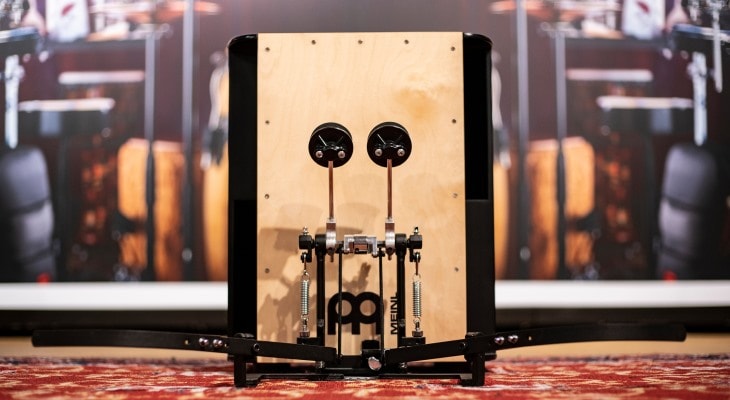
Let’s face it, cajons aren’t quite the same as playing on a drum kit. They’re often used as quiet alternatives in venues such as restaurants and coffee shops.
However, they just don’t give you that same feeling as a drum kit would. One thing that will add to that feeling is a pedal that makes you feel like you’re playing a kick drum.
Luckily, there is a booming business of cajon pedals ready for you to dive into. Here are some of the best products to check out.
Best Cajon Pedals for the Money
Meinl is a company that is most well-known for their high-quality cymbals. Loved by many drummers, their products are highly sought after and used in a variety of situations.
The company’s secondary focus is their percussion division. Meinl Percussion offers the exact same high-quality products as Meinl Cymbals. This cajon pedal is proof of that.
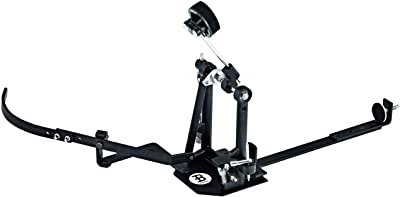
It’s fairly unique in that it doesn’t look like your standard kick drum pedal with a cable connecting to the beater. Instead, it has a simple metal rod that you press down with your foot that controls the action of the beater.
The metal bar in place of a pedal is an innovation that may be a hit or miss for musicians. Since the bar is lower to the ground than a pedal, it feels a lot more comfortable to play with your foot, especially for someone who’s not used to using a pedal.
It has a direct-drive action which makes it extremely smooth and quick. The pedal bar is curved, allowing it to fall into the natural position of your leg.
The pedal beater has a soft surface that will bring out a warm tone from the cajon. It’s fairly light, meaning you won’t be using too much energy when playing the pedal.
The biggest downside to this pedal is the setup process. It can be incredibly difficult to set it up and get it running. The structure can be confusing to understand since it’s a bit different from a conventional pedal.
However, once you’ve got it up and running, you’ll be very happy with the working product.
At first, I thought the beater wouldn’t be as loud as I would have liked it to be. It looks a lot softer and lighter than many other pedals on the market. However, I was pleasantly surprised to find that it packed quite a punch.
PROS
CONS
DW drum kits are known for their solid construction and professional qualities. When it comes to pedals, those are known for being the pedal you buy when you don’t plan on buying another one for years to come.
This DW cajon pedal falls under that category as well. It has such immaculate construction that you probably won’t need to buy a cajon pedal ever again.
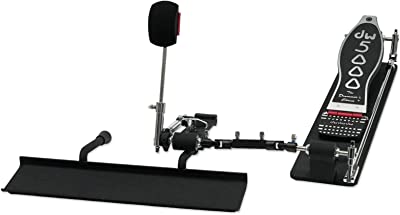
It’s packed with impressive features. Firstly, it’s a direct-drive pedal that promises smooth playing thanks to DW’s GlideTrack system. The direct link attachment means that everything you play will transfer over to the cajon with no feeling of pause or lag.
The pedal includes a sturdy platform that connects to the base of the cajon and keeps it steady. It allows you to play in very unstable environments and know that your cajon isn’t going to be moving around.
The pedal has 3 linkage lengths, allowing you to choose between different playing setups. This makes it a great option for a cajon that will be played by multiple people with different playing preferences.
The included beater has two sides. One is soft wool that produces a warm tone. The other is a small rubber piece that produces a striking tone with more attack.
This will be one of the smoothest pedals you’ll ever play. It’s easy to set up and even easier to transport around. The only limiting factor is that it’s fairly expensive for a cajon pedal. Like all DW pedals, you’ll need to save up a bit of cash to get it.
I love that the pedal is the tried and tested DW 5000 pedal. It feels very similar to the 5000 pedal that is designed for acoustic drums. It’s arguably one of the most popular pedals in the world, so it’s great to have it in a form that will fit a cajon.
PROS
CONS
When thinking of cajon pedals, most people think of standard kick pedals connected by a wire to the beater. It’s certainly one popular type of cajon pedal for many good reasons.
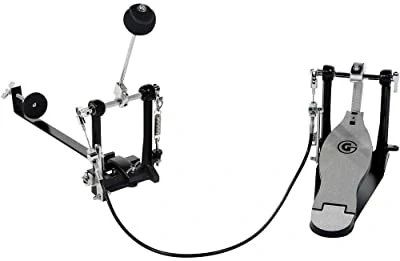
Unsurprisingly, Gibraltar has a great wired pedal in the G3GCP. It’s unsurprising because Gibraltar specifically specializes in making hardware for percussion instruments.
The reason that wires are popular is that they allow you to easily place the pedal wherever you want to while playing. This saves time on having to unscrew knobs to adjust certain things just to move a pedal around.
The G3GCP pedal has a fairly simple layout that does the job. It’s a strap drive pedal, allowing you to place the beater head in a comfortable position. The cam arms of the pedal are highly adjustable, allowing you to change them to suit your playing style.
The pedal has a tennis ball beater head. It provides a round tone that sits somewhere in the middle of sounding aggressive and warm.
Unfortunately, the pedal tends to have a slight delay between when you hit the pedal and when the beater hits. This can get very frustrating. However, it can be fixed with some delicate adjustments to the pedal settings.
If you’re looking for a cheaper pedal without any of the bells and whistles of more expensive pedals, this is a good one to get.
I’m not the biggest fan of the tennis ball beater. Even though it sits in the middle of being aggressive and warm, I’ve found that I mostly want warm sounds from cajons whenever I’ve used them. So, the ball is a bit too bright. If you feel the same, you could just swap it out with a fluffier beater.
PROS
CONS
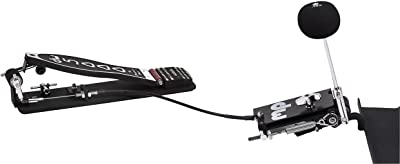
If you’re a fan of the cable design and you something a bit more heavy-duty, the DW 5000CJ will do the trick. DW have gone on record saying it’s the best cajon pedal on the market. Although that’s a bit of proud advertising from DW themselves, it does hold a fair bit of truth.
The remote cable isn’t as long as the Gibraltar one. However, it still adds some extra maneuverability to the pedal. The most important feature of this cable is that there's virtually no delay between the pedal and the beater.
The pedal comes with a footboard, similar to the previous DW pedal. However, this one isn’t as rigid. It still works superbly well, though.
A highlight of the pedal is the beater. It just sounds so good when placed near the sweet spot of the cajon. Whether you’re a drummer or guitarist, you’re going to love the tone it brings out.
One big bonus feature of the pedal is that it comes with a solid carry bag. A small thing to point out, but it will make a huge difference when traveling and playing at different gigs. It will keep the pedal safe and secure.
Overall, it’s a fantastic cajon pedal. Similar to the previous DW pedal, it’s pretty expensive.
I’ve found this to be the most responsive cable pedal out there. It’s still not as responsive as a direct drive beater, but it gets pretty close. The pedal also feels great under your foot barring the wonky footboard.
I wish DW would come up with better naming conventions for these pedals, though. They’re quite a mouthful!PROS
CONS
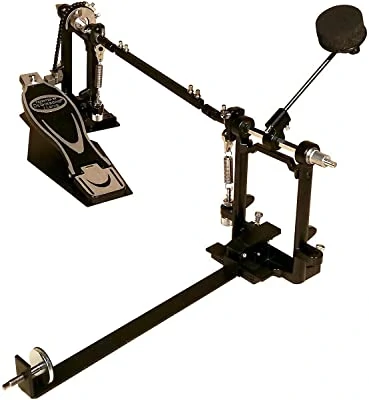
You may not have heard of DG De Gregorio before reading this. They’re a company that specializes in making cajons. So, they’ve taken the cajon making experience and produced a kick pedal that perfectly matches it. This pedal has everything from versatility to durability.
It’s the one pedal on this list that acts most similar to a standard bass drum pedal. The pedal is connected to the beater by a chain-drive system, making it feel like you’re playing a bass drum.
It has a direct-drive action, meaning what you play on the pedal will transfer smoothly over to the beater with no delay. It’s responsive and extremely sensitive to everything you play.
The biggest benefit of this pedal is that it’s reversible, meaning you can use either your left or right foot to play. You just need to change the pedal around after adjusting one screw.
This is great news for the lefties of the world who often feel left out when it comes to gear. Left-footed musicians often can’t play on cable-driven cajon pedals. So, this is a great alternative.
Along with the versatility and smooth action, this pedal is extremely solid and durable. It’s built like a tank and will last many years of heavy use. The beater has a soft material that produces a warm tone from the cajon.
The DGP is a fantastic option for anyone who wants a super solid piece of equipment. If you want to feel like you’re playing drums, this is the pedal for you. It will set you back a few hundred dollars though.
PROS
CONS
Direct Drive vs Cable Pedals
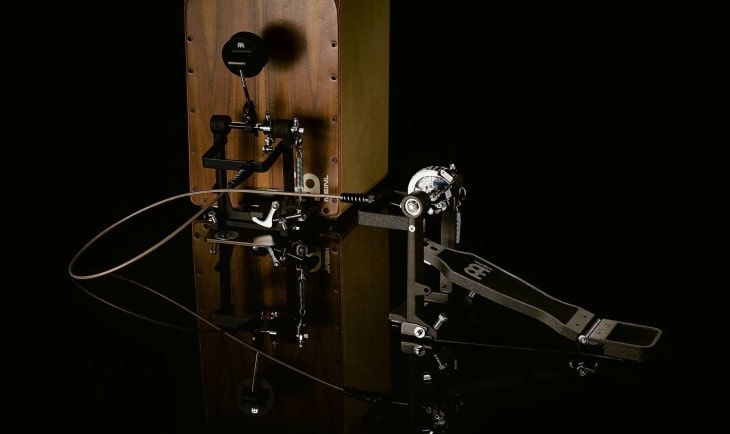
The two main types of pedals you’ll find for cajons are direct drive and cable pedals. Cable pedals are also commonly referred to as wired pedals. Direct drive pedals work very similarly to standard bass drum pedals that you use with acoustic drums.
The pedal connects to a mechanism that moves as soon as you press the pedal down, giving you an authentic and quick reaction to your foot motion. Direct drive pedals typically feel a lot better to play on. However, they can be a mission to set up with your cajon.
Instead of simply connecting the pedal to have the beater hit the cajon head-on, the pedals are designed so that you can sit and play the cajon with your hands and foot at the same time. This requires some tricky engineering design on the pedal maker’s part. Some direct drive pedals are incredibly complicated to set up. They also don’t allow much maneuverability.
Cable pedals, on the other hand, are made to work with a hydraulic system. Your press the pedal down and the force travels through the cable to the beater. They’re not as responsive as direct drive pedals, but they allow way more maneuverability.
They’re easier to set up and work much better when you’re sitting in an awkward position and need to have your pedal in a comfortable place. The pedal isn’t locked in place, so you can move it around freely.
To wrap that up, direct drive pedals feel more secure and authentic while cable pedals are lighter and more flexible. Direct drive pedals can be difficult to set up while cable pedals aren’t as responsive.Conclusion
Cajon pedals are great ways to get an extra sound while freeing your hands up to play other things. If you’re a guitarist, they’re the perfect option for adding some rhythm to your sets.
If you’re a percussionist, you can play rhythms with your feet while playing other things like tambourines and shakers.
Each pedal on this list has some great qualities that will provide value. You just need to choose which one will suit you best.
